
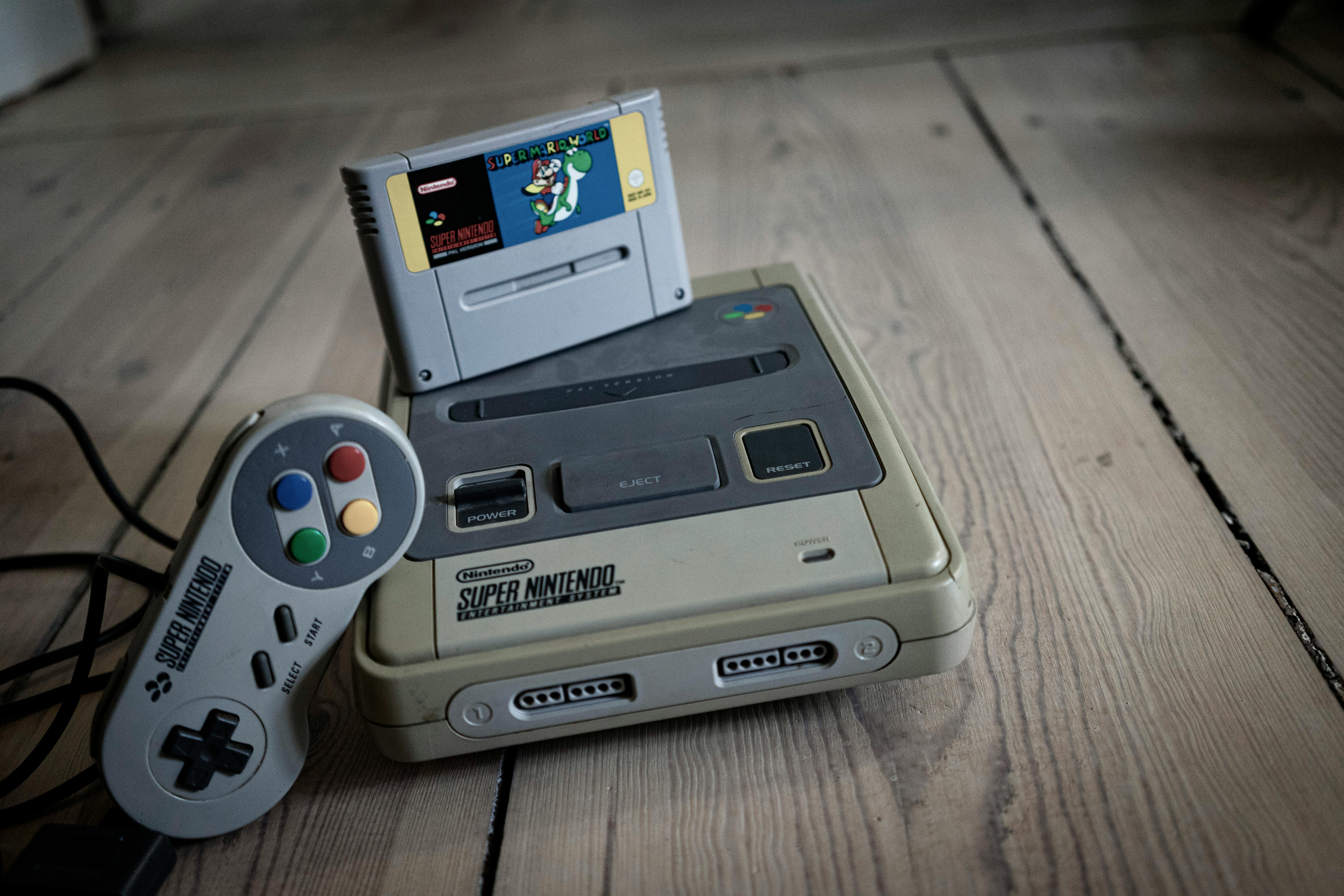
Older games return in several distinct forms, and the labels applied are inconsistent enough that knowing what was actually done requires looking past the marketing.
Port
Running the original game on different hardware with minimal change.
Which may involve substantial engineering if the target architecture differs, and it aims to reproduce the original rather than improve it.
Resolution and frame rate may increase because the hardware permits it, without any change to the content.
Remaster
The original game with improved assets and technical presentation.
Higher resolution textures, improved lighting, better frame rates, sometimes re-recorded audio.
The underlying code, level design and systems remain, which means the game plays as it did including whatever has aged poorly.
Which is why remasters of games with dated control schemes remain awkward regardless of how they look.
Remake
Rebuilding the game, generally in a modern engine, with new assets throughout.
Design decisions are revisited, systems may be replaced entirely, and content may be added or removed.
Which produces something that is a new game referencing an old one, and the fidelity to the original varies enormously between projects.
The tension is between people who want the experience they remember and people who want it modernised, and those are incompatible goals.
Emulation-based releases
Running the original code in an emulator with a wrapper.
Which is cheap and preserves original behaviour exactly, including bugs.
Quality varies enormously depending on the emulator and on added features like save states, rewind and display filters.
Some commercial releases have used emulators derived from community projects, which has caused disputes about licensing and attribution.
Why they happen
Commercially, they are lower risk than new development, since the design is proven and the audience is identifiable.
They also monetise catalogues that generate nothing otherwise, and they maintain trade mark and franchise presence between major releases.
Practically, they make games playable that would otherwise require obsolete hardware, which is a genuine preservation benefit.
The source material problem
Where remasters get harder than expected.
Original high-resolution assets are frequently lost, since studios did not archive systematically and storage was expensive.
Which means textures must be recreated or upscaled, and source code may be incomplete or unbuildable with any available toolchain.
Several remaster projects have involved reconstructing from the shipped product because nothing better survived.
Licensing
A recurring obstacle.
Music, likenesses, vehicles and branded content are licensed for defined terms, which expire.
Which is why re-releases sometimes appear with different soundtracks or with content removed, and why some games cannot be re-released at all.
Renegotiating decades later is expensive and sometimes impossible when rights holders cannot be identified.
What to check before buying
What was actually changed, which is generally described somewhere even when the marketing is vague.
Whether content was removed for licensing reasons.
And whether the original remains available, since in some cases it is delisted when the new version appears, which removes the choice.
Preservation of the original
The question that determines whether a re-release is additive or substitutive.
Where the original remains purchasable alongside a remake, players choose.
Where it is delisted, the new version becomes the only available form, which affects how the work is understood historically.
Which has happened repeatedly and is generally not announced clearly in advance.
Modding communities
Fan restoration and improvement projects have produced results comparable to commercial remasters, using higher-resolution assets and engine improvements.
Their legal position depends on requiring an owned copy of the original and on not distributing copyrighted assets.
Publisher responses have ranged from tolerance to takedowns, sometimes shortly before announcing a commercial version.
What a good remaster does
Preserves what worked, addresses what has aged for reasons unrelated to the design — control schemes, frame rates, aspect ratios, quality of life around saving and navigation.
Which is a narrower brief than modernising, and it is the one that satisfies the audience that wanted the game re-released.
Frame rate and physics
A technical trap in older games.
Many were built with logic tied to frame rate, meaning that running faster changes movement speed, physics behaviour and timing.
Which is why some ports run at higher frame rates with broken behaviour, and why decoupling logic from rendering is a substantial engineering task rather than a setting.
Games where this was done poorly produce the well-known cases of physics breaking at high frame rates.
Aspect ratio and interface
Interfaces designed for older aspect ratios need rebuilding rather than stretching.
Which is why some re-releases present the original ratio with borders, and why others rebuild the interface entirely — the second is considerably more work.
Expectation management
Announcing clearly which category a project falls into avoids most of the disappointment these releases generate.
Marketing that implies a remake while delivering a remaster produces reception problems that accurate description would have avoided entirely.
Which is a communication problem rather than a development one, and it is entirely within the publisher control.