
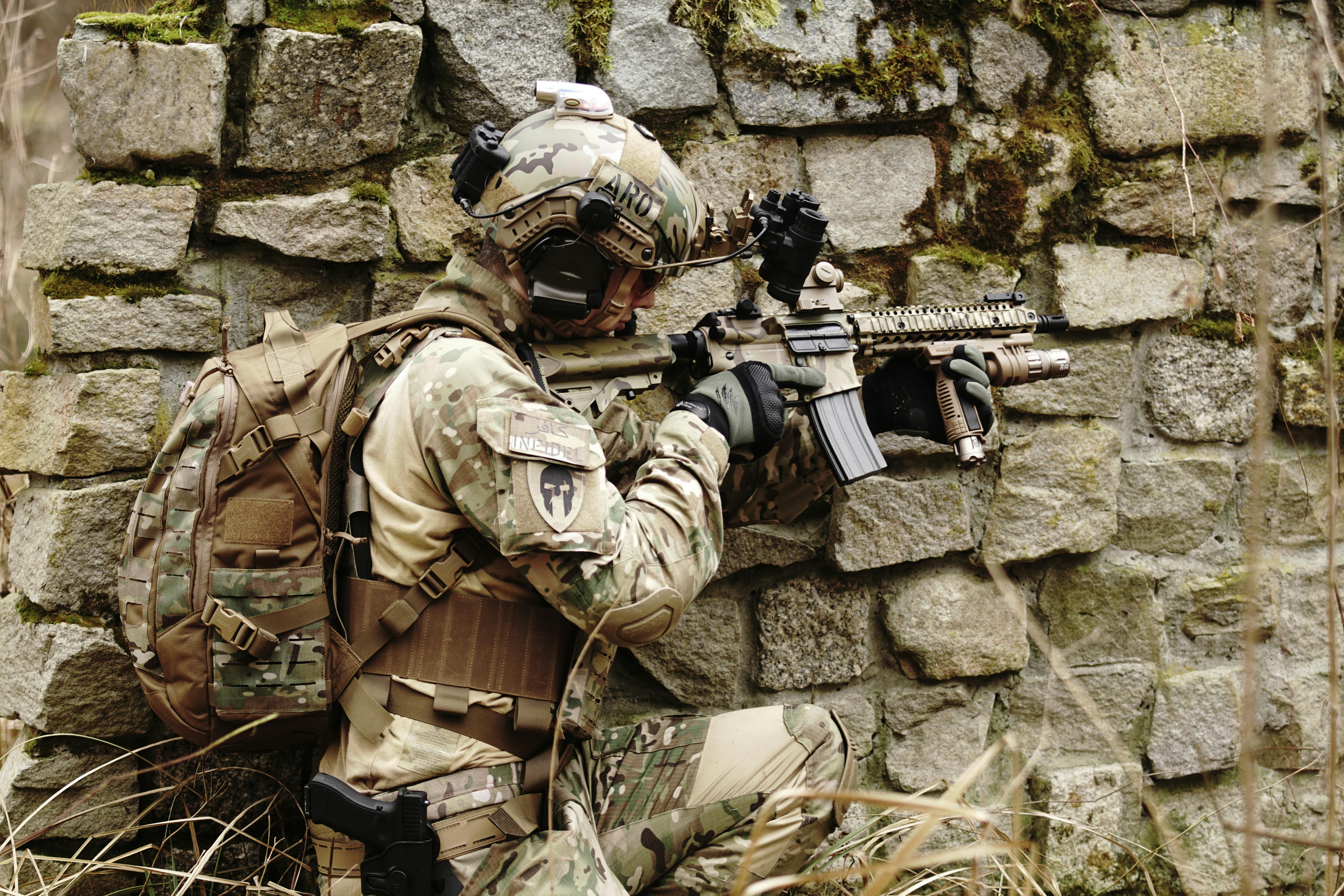
Weapons in competitive shooters climb and drift in a repeatable path rather than scattering unpredictably. The pattern is authored, and the reason is that randomness cannot be practised.
Random spread rewards nothing
If each shot deviated randomly, the outcome of sustained fire would be decided by chance, and no amount of practice would change a player's results.
That removes the connection between effort and outcome, which is what competitive players are actually paying attention to when they describe a weapon as feeling fair.
A fixed pattern preserves the challenge while making mastery possible, since a player who learns the path can counteract it deliberately.
The pattern becomes a second skill
Counteracting recoil requires moving the aim opposite to the climb at the right speed, which is a distinct motor skill from placing the initial shot.
Different weapons have different patterns, so a player invests time per weapon and develops a preference based on which patterns they have learned.
This creates attachment and specialisation, both of which give a shooter's arsenal more depth than the statistics alone would provide.
Patterns are shaped to enforce range roles
A weapon intended for close combat is given a pattern that becomes uncontrollable quickly, so extended fire at distance fails regardless of skill.
A precision weapon may have a small, slow pattern that punishes rapid fire instead, encouraging measured shooting.
The pattern is therefore a balancing instrument as much as a feel decision. It defines the situations in which a weapon is the right choice.
Randomness is usually layered on top
Most shooters combine a fixed pattern with a small random component, so the path is learnable but not perfectly reproducible.
The randomness prevents pixel-perfect memorisation and stops the mechanic reducing to a single memorised movement, which would make it a solved problem.
The balance between the two is a defining characteristic of a shooter, and adjusting it changes how much of the outcome is skill and how much is variance.
Visual feedback has to match the mechanic
The camera movement and weapon animation must communicate the pattern clearly, or a player cannot learn what they are meant to counteract.
Where the visual climb differs from the actual deviation of the shots, players describe the weapon as inconsistent even when it is entirely deterministic.
This is why recoil animation is treated as a functional system rather than decoration, and why changes to it draw complaints even when no numbers moved.