
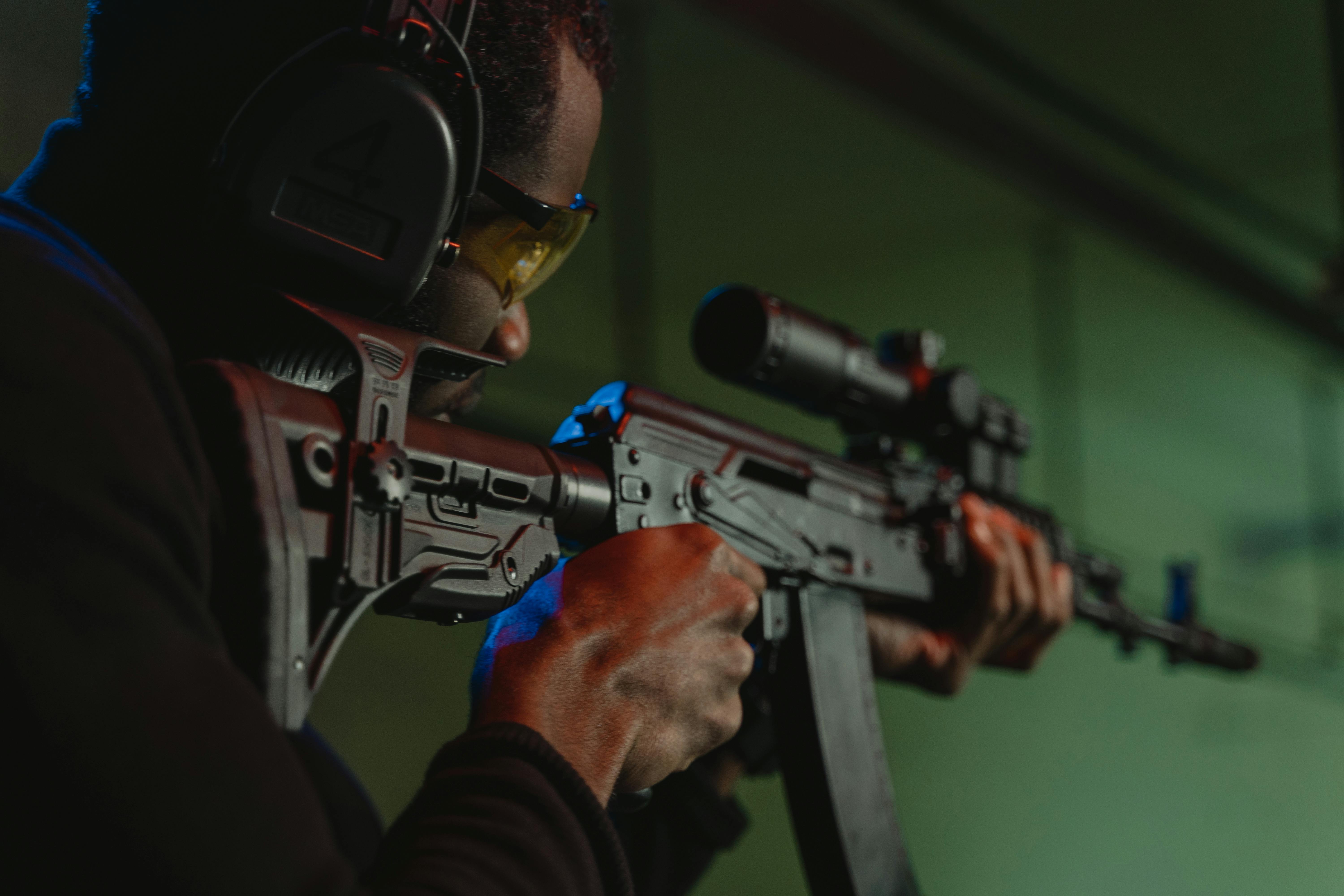
Dive into the exhilarating world of Virtual Reality FPS in 2026. Discover the best VR headsets, essential accessories, and cutting-edge games that offer unparalleled immersion and a competitive edge. This comprehensive guide helps you choose the perfect VR gaming setup, optimizing for performance, comfort, and the ultimate money-generating experience.
Introduction to the Topic
Welcome, fellow gamers, to 2026 – a year where the line between reality and virtual combat has never been blurrier. The realm of First-Person Shooters (FPS) has undergone a seismic shift, propelled by the relentless innovation in Virtual Reality (VR) technology. Gone are the days of mere screen-watching; today, you are the soldier, the sniper, the cyber-commando. VR FPS isn't just a genre; it's an experience, a competitive arena, and for many, the future of interactive entertainment. At searchgamex.com, we’ve been tracking this revolution, and the landscape in 2026 is nothing short of breathtaking. From hyper-realistic haptic feedback to foveated rendering that makes every pixel count, the technology is here, and it's demanding your attention. This article is your definitive guide to navigating the thrilling, often overwhelming, world of VR FPS. Whether you're a seasoned VR veteran looking to upgrade or a curious newcomer ready to make your first investment, we'll equip you with the knowledge to build the ultimate VR FPS setup, ensuring maximum immersion and a decisive competitive advantage.
Backgrounds & Facts
The journey of VR FPS has been one of exponential growth. A decade ago, VR was a niche, often clunky, experience plagued by motion sickness and prohibitive costs. Fast forward to 2026, and the narrative has completely flipped. Major players like Meta, Valve, and Pico have poured billions into R&D, leading to astonishing breakthroughs. Wireless standalone headsets now boast resolutions exceeding 4K per eye, with refresh rates comfortably hitting 144Hz, eliminating the dreaded screen-door effect and reducing simulator sickness to a minimum. Advanced inside-out tracking systems are now virtually flawless, offering sub-millimeter precision for even the most rapid movements. Full-body tracking solutions, once reserved for high-end arcades, are increasingly accessible, allowing players to fully embody their in-game avatars. Moreover, haptic technology has evolved beyond simple rumble, with sophisticated vests and gloves providing localized feedback, letting you feel the recoil of your weapon, the impact of a bullet, or the texture of a virtual surface. Cloud VR gaming is also gaining traction, allowing users with lower-spec PCs to stream high-fidelity VR experiences, further democratizing access to this incredible technology. The market has matured, offering a spectrum of options from budget-friendly standalone units to professional-grade PC VR systems, each catering to different needs and budgets. This evolution isn't just about hardware; game developers have mastered the art of VR game design, creating titles specifically engineered to leverage VR's unique strengths, leading to unparalleled engagement and replayability.
Expert Opinion / Analysis
"The competitive VR FPS scene in 2026 is unlike anything we've ever seen," states Dr. Anya Sharma, lead analyst at Virtual Horizons Research. "The convergence of high-fidelity graphics, precise haptics, and almost zero-latency tracking has transformed titles like Pavlov VR 2026 and Contractors Showdown into legitimate esports contenders. We're seeing professional teams invest heavily in custom VR rigs and training regimens. The skill ceiling has risen dramatically, rewarding not just aim, but spatial awareness, physical dexterity, and tactical movement that simply isn't possible on a flat screen."
Indeed, the analysis confirms that user engagement and retention rates for top-tier VR FPS titles consistently outperform traditional flat-screen counterparts. The immersive nature drives longer play sessions and fosters stronger community bonds. However, challenges persist. While motion sickness remedies and comfort settings have vastly improved, some users still experience discomfort. Furthermore, the initial investment for a truly high-end VR FPS setup can be substantial, making careful purchasing decisions crucial. Our experts at searchgamex.com emphasize that while the technology is powerful, understanding your own needs – whether it's competitive play, casual fun, or content creation – is paramount before committing to a purchase. The industry is also grappling with the integration of AI-powered antagonists that learn and adapt, creating truly unpredictable combat scenarios, pushing players to their limits. This adaptive AI, combined with increasingly realistic physics engines, is setting a new standard for FPS engagement.
💰 Best Options in Comparison (VERY IMPORTANT)
Choosing the right VR FPS setup in 2026 requires careful consideration of budget, desired experience, and compatibility. Here are our top recommendations, optimized for maximum performance, immersion, and value for your investment:
- Meta Quest Pro 3: The Standalone Powerhouse
The undisputed champion for standalone VR, the Quest Pro 3 offers incredible freedom with its wireless design and powerful XR2+ Gen 3 chipset. With foveated rendering, crystal-clear 4K per-eye resolution, and enhanced haptic controllers, it delivers a PC VR-like experience without being tethered. Its mixed reality capabilities are also unmatched, seamlessly blending virtual elements into your real environment, perfect for tactical overlays or co-op experiences. Ideal for those prioritizing convenience and a robust game library. - Valve Index 3: The PC VR Enthusiast's Dream
For uncompromising fidelity and precision, the Valve Index 3 remains the gold standard for PC VR. Boasting a staggering 5K per-eye resolution, a 160-degree field of view, and a silky-smooth 144Hz refresh rate, it provides an unparalleled visual experience. Its Lighthouse 3.0 tracking system offers sub-millimeter accuracy for full-body tracking, and the "Knuckles 2.0" controllers provide individual finger tracking for hyper-realistic weapon manipulation. Best for competitive players and those with high-end gaming PCs ready to push graphical boundaries. - Pico 6 Pro: The Budget-Friendly Contender
Pico has solidified its position as a serious alternative, and the Pico 6 Pro is a testament to that. Offering excellent value, it provides a 3K per-eye resolution, a comfortable design, and reliable standalone performance that rivals older Quest models. While it may not match the raw power of the Quest Pro 3 or the fidelity of the Index 3, its aggressive pricing and growing game library make it an ideal entry point for those looking to experience high-quality VR FPS without breaking the bank. Great for casual players or those on a tighter budget. - Sony PlayStation VR 3 (PSVR 3): Console VR King
Exclusively for PlayStation 6 owners, the PSVR 3 continues Sony's legacy of console VR excellence. With vibrant OLED displays, haptic feedback integrated into the headset and controllers, and a strong lineup of exclusive FPS titles (like Horizon: Call of the Mountain 2 or SIEGE VR), it offers a streamlined, high-quality VR experience. While limited to the PlayStation ecosystem, its ease of use and dedicated game library make it a fantastic option for console gamers. - Haptic Vests & Gun Stocks: Essential Accessories
To truly elevate your VR FPS game, consider investing in accessories. Haptic vests like the "BHaptics TactSuit X40 2.0" provide full-torso feedback, letting you feel every bullet impact and explosion. A good VR gun stock, such as the "MagTube Pro 2026," significantly improves aiming stability and immersion, mimicking the feel of a real weapon. These aren't just luxuries; they're competitive advantages.
VR FPS Headset Comparison Chart (2026)
| Feature | Meta Quest Pro 3 | Valve Index 3 | Pico 6 Pro | Sony PSVR 3 |
|---|---|---|---|---|
| Type | Standalone / PC VR (Wireless) | PC VR (Tethered) | Standalone / PC VR (Wireless) | Console VR (PS6) |
| Resolution (per eye) | 4K+ (2160x2160) | 5K (2560x2560) | 3K (1600x1600) | 4K OLED (2000x2040) |
| Refresh Rate | 90Hz, 120Hz | 120Hz, 144Hz | 90Hz, 120Hz | 90Hz, 120Hz |
| Field of View (FOV) | ~105 degrees | ~160 degrees | ~98 degrees | ~110 degrees |
| Tracking | Advanced Inside-Out | Lighthouse 3.0 (Outside-In) | Inside-Out | Inside-Out |
| Key Features | Wireless freedom, Mixed Reality, Foveated Rendering, Eye/Face Tracking | Highest fidelity, Wide FOV, Precise Full-Body Tracking, Finger Tracking | Cost-effective, Comfortable, Growing library, Wireless | Seamless console integration, Exclusive titles, Haptic headset feedback |
| Est. Price (2026) | $1299 - $1499 | $1599 - $1899 | $699 - $899 | $799 - $999 |
| Best For | All-around, hybrid users, MR enthusiasts | Hardcore PC VR gamers, Esports pros | Budget-conscious, casual VR gamers | PlayStation ecosystem users, console exclusivity |
Outlook & Trends
The future of VR FPS is dazzling and dynamic. By 2026, we're already seeing the foundations of truly persistent virtual worlds, where players can seamlessly transition between different FPS games and social hubs, carrying their avatars and progress with them – a true "Metaverse" vision becoming reality. Expect to see even more sophisticated AI companions and adversaries, capable of learning individual player tactics and adapting on the fly, making every encounter feel fresh and unpredictable. Further advancements in haptic suits and full-body tracking will lead to unparalleled levels of physical immersion, blurring the lines between game and reality. Imagine feeling the wind resistance as you sprint, or the vibration of a distant explosion through your entire body. Cloud-based VR streaming services will become even more prevalent, allowing high-fidelity VR FPS gaming on virtually any device, removing the barrier of expensive hardware for many. Furthermore, the integration of AR overlays during VR gameplay will provide tactical information or social interactions without breaking immersion. Esports in VR FPS will continue its meteoric rise, with major tournaments and professional leagues offering substantial prize pools, attracting a new generation of digital athletes. The emphasis will shift from mere graphical prowess to truly intelligent, adaptive, and physically engaging gameplay. Developers are also exploring procedural generation combined with AI to create infinitely replayable environments, ensuring that the VR FPS experience never gets stale.
Conclusion
The year 2026 marks a pivotal moment for VR FPS. It's no longer a novelty but a fully-fledged, highly competitive, and deeply immersive gaming platform. The choices available, from powerful standalone headsets to uncompromising PC VR systems, cater to every type of gamer and budget. By carefully selecting your hardware and investing in the right accessories, you can unlock an unparalleled level of engagement and gain a significant edge on the virtual battlefield. At searchgamex.com, we believe that the future of FPS is undeniably virtual, and the time to jump in, upgrade, and dominate is now. Explore our curated deals and exclusive bundles today to start your VR FPS journey!