
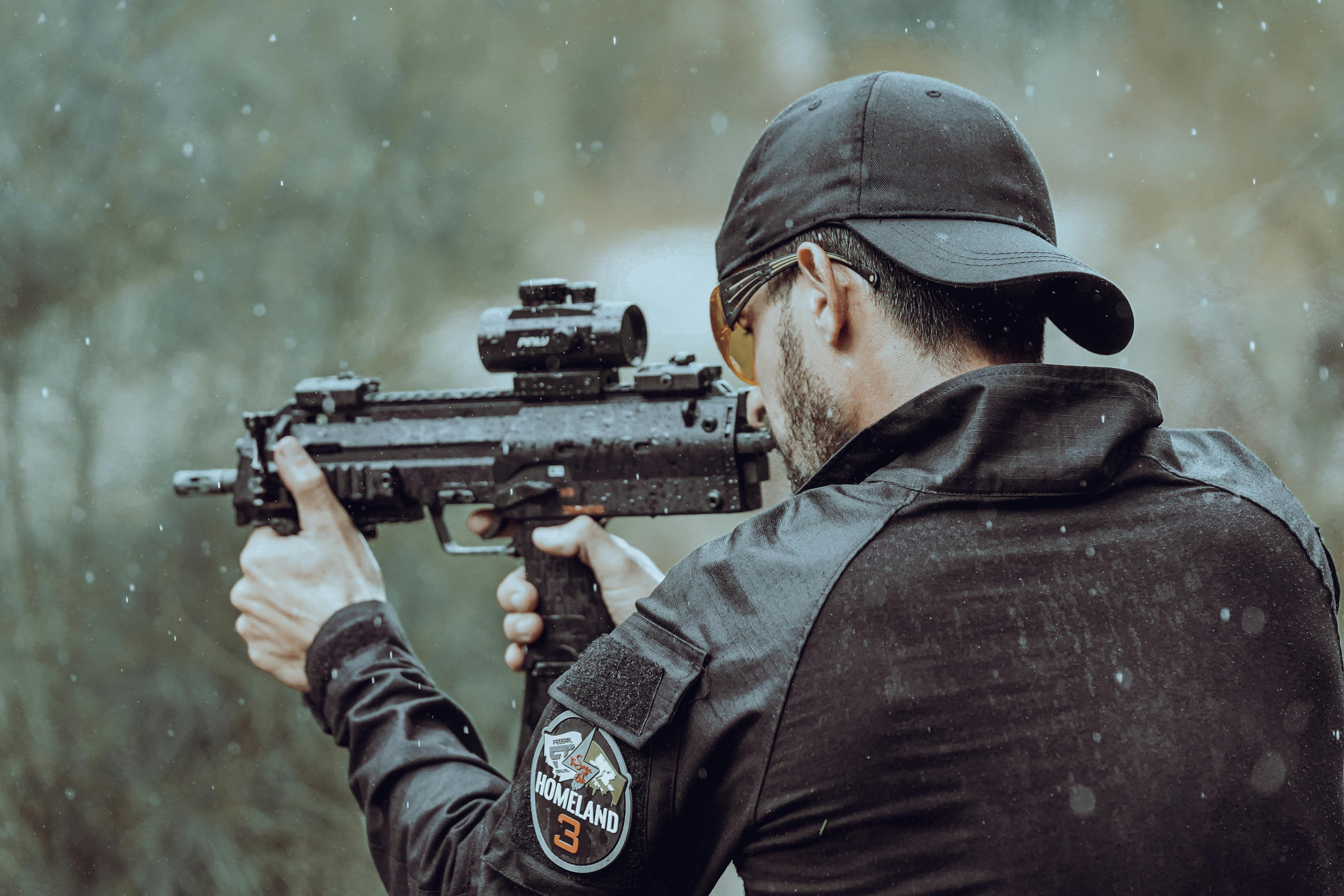
A shot in a multiplayer shooter is not tested against the character you can see. It is tested against a set of simplified shapes attached to the skeleton, and the difference is where most complaints originate.
Testing against the visible model is too expensive
A character model contains a very large number of triangles, and checking a shot against all of them many times per second for every player is not practical on a server.
Simplified shapes such as capsules and boxes can be tested with far less computation, and the saving is large enough to determine what the server can support.
These shapes are attached to the animation skeleton, so they move with the character while remaining cheap to evaluate.
Simplification necessarily changes the outline
A capsule around an arm is slightly larger than the arm in some places and slightly smaller in others. The approximation cannot match the silhouette exactly.
Shots near the edge of a character therefore sometimes register when they appear to miss, and sometimes fail when they appear to connect.
Designers usually err toward slightly generous shapes, because a shot that visually connects and does not register feels worse to players than the reverse.
Animation makes the mismatch worse
Cosmetic animation layers such as cloth, hair and weapon sway move independently of the skeleton and are not represented in the shapes at all.
A character in an extreme pose can have a visible outline that departs substantially from the shapes attached to their bones.
This is why disputed shots cluster around characters that are sliding, diving or vaulting. The pose is exactly where approximation is weakest.
Servers rewind time to judge the shot
Because a player sees opponents where they were a moment ago, servers reconstruct past positions and test the shot against that reconstruction.
The reconstruction is sampled at intervals rather than continuously, so a fast-moving target's position is interpolated between known points.
The combination of approximate shapes and interpolated positions is why replays sometimes show an outcome that neither player observed at the time.
Headshot regions concentrate the problem
Head shapes are small, and a small volume magnifies any error in position or approximation. A minor discrepancy that is invisible on a torso is decisive on a head.
Games with large damage multipliers for head shots therefore attract more disputes, because the same imprecision produces a much larger difference in outcome.
Some designs respond by enlarging the head volume slightly relative to the model, accepting a visual inconsistency in exchange for a more predictable result.