
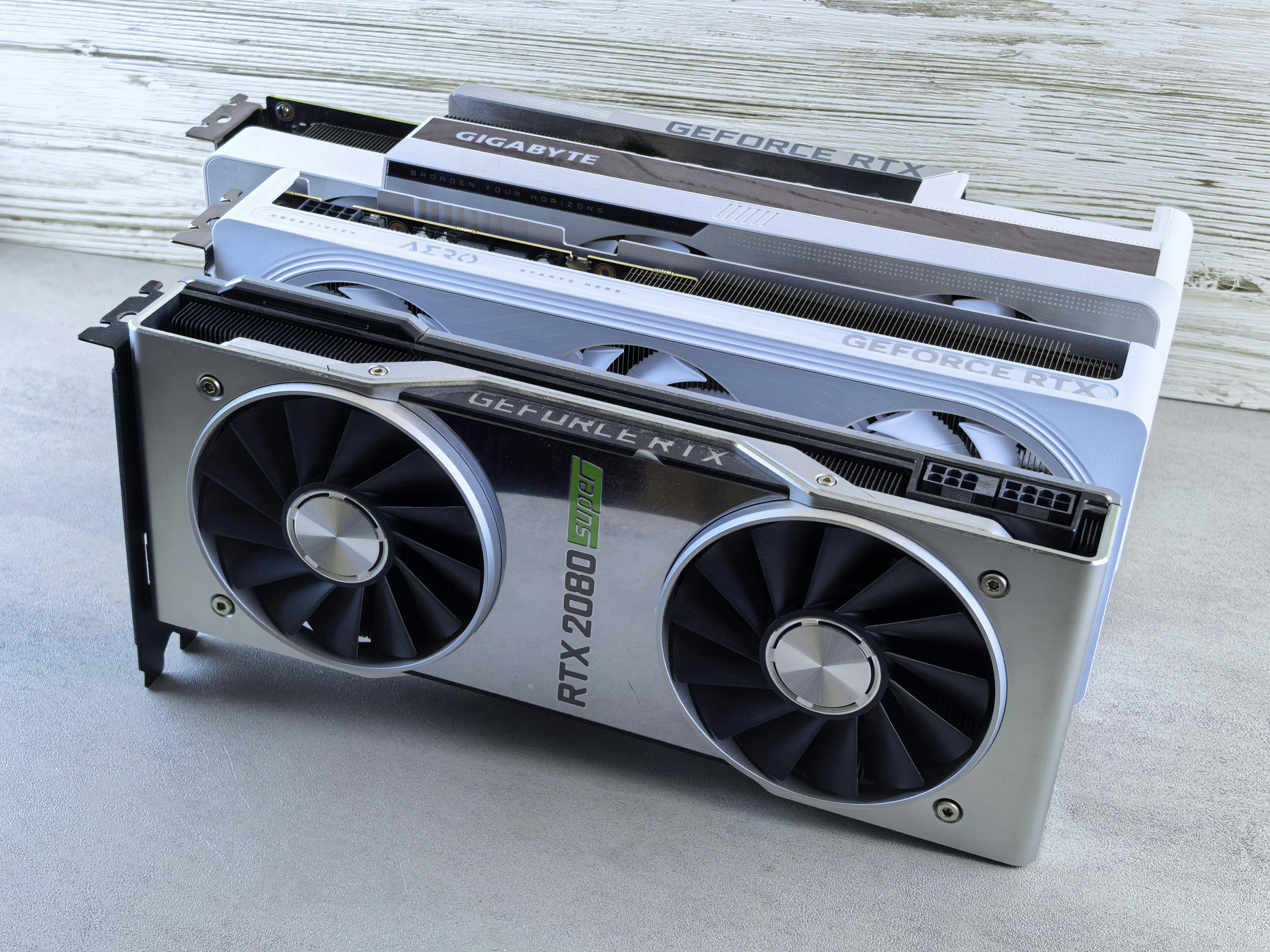
The hum of your high-end GPU. The thrill of upgrading. The endless pursuit of more frames, more pixels, more power. What if we told you that entire ritual, that core tenet of PC gaming, is about to become a relic? Imagine waking up to a world where your monstrous graphics card is nothing more than a glorified paperweight, its immense power rendered utterly meaningless by an invisible revolution. This isn't science fiction; it's the imminent reality where Artificial Intelligence isn't just playing games, it's *creating* them, in real-time, making your local hardware not just obsolete, but irrelevant.
🔥 What's Happening Right Now
For decades, the gospel of gaming has been simple: the better your hardware, the better your experience. From the pixelated sprites of early consoles to the photorealistic worlds rendered by today's behemoth GPUs, local processing power has been king. Gamers in the US, a nation at the forefront of technological adoption, have consistently invested billions into upgrading their rigs, chasing the elusive 4K, 120fps dream. NVIDIA, AMD, Intel – these names have become synonymous with the very act of gaming.
But a seismic shift is underway, one that transcends mere incremental improvements in silicon. We're on the cusp of an AI revolution so profound, it will fundamentally redefine what "gaming hardware" even means. Forget the current iteration of cloud gaming, which largely streams pre-rendered frames from powerful remote servers to your local screen. That's just the appetizer. The main course is generative AI, and it’s about to move the entire computational burden – and indeed, the creative engine – of gaming off your local machine and into the vast, interconnected neural networks of the cloud.
Imagine games where every blade of grass, every ripple in a pond, every non-player character (NPC) interaction is not pre-scripted or pre-rendered, but dynamically generated and adapted in real-time by an AI. This isn't just about better graphics; it's about infinitely expansive, truly dynamic worlds where every playthrough is genuinely unique. NPCs powered by advanced large language models (LLMs) won't just follow dialogue trees; they'll learn, adapt, remember your actions, and develop unique personalities. Storylines will unfurl not as linear narratives, but as emergent experiences shaped by your choices and the AI's boundless creativity.
This future is being built on the back of monumental advancements in AI. Generative Adversarial Networks (GANs) and diffusion models are already creating photorealistic images and videos from simple text prompts. LLMs like GPT-4 are demonstrating unprecedented capabilities in understanding and generating human-like text, opening the door for truly intelligent NPCs and adaptive storytelling. When you combine these with ever-increasing internet speeds across the US – 5G, fiber optic expansion – the latency barriers that once plagued cloud gaming begin to crumble, paving the way for a seamless, AI-driven experience that demands minimal local processing. Your local machine won't need to render complex environments or run sophisticated AI models; it will simply serve as a sophisticated display and input device, a "dumb terminal" in the most intelligent gaming ecosystem ever conceived. The "intelligence" isn't in your rig; it's everywhere else.
💡 Financial Impact
The financial ramifications of this shift are nothing short of monumental, promising to reshape industries and create entirely new commercial ecosystems. For consumers, the immediate allure is clear: the end of the never-ending upgrade cycle. The days of shelling out $1,000, $1,500, or even $2,000 for a top-tier GPU every few years will likely vanish. This represents a massive redirection of consumer spending. Instead of hardware purchases, the focus will pivot dramatically towards subscriptions to AI gaming platforms, premium access to generative AI models for game customization, and perhaps even "AI companion" services within games.
Hardware manufacturers like NVIDIA and AMD, currently kings of the GPU market, face a critical juncture. While the demand for their high-performance chips won't disappear overnight – they will be the backbone of the cloud infrastructure running these AI models – their direct-to-consumer GPU business for gaming will undeniably shrink. Their future lies in becoming the primary suppliers of AI accelerators and data center solutions to the companies building these vast AI gaming clouds. Intel, already diversifying into AI and foundry services, might find itself better positioned if it can rapidly scale its AI chip offerings for data centers.
Game developers stand to gain immense efficiencies. The painstaking, expensive process of creating every single asset, every texture, every character model, and every line of dialogue could be dramatically streamlined. AI could generate entire worlds, populate them with unique creatures, and even write dynamic quests based on a few high-level prompts. This lowers development costs and democratizes game creation, potentially leading to an explosion of innovative, smaller studios. However, the investment will shift towards developing sophisticated AI models, designing compelling AI prompts, and managing vast cloud infrastructures, creating a new class of specialized talent.
For investors, this presents a fertile ground for new opportunities. Companies specializing in AI model development, cloud infrastructure providers (like AWS, Google Cloud, Microsoft Azure), and new platforms offering AI-driven gaming subscriptions are poised for explosive growth. There's also potential for investment in "AI-native" game studios that embrace this paradigm from the ground up, and even in companies developing specialized, low-latency display technologies or haptic feedback systems designed to enhance the AI-generated experiences. The commercial value isn't just in making games; it's in building the intelligent systems that will make, run, and evolve games in real-time.
The overall market will expand significantly. By removing the high barrier to entry of expensive gaming PCs, AI-driven cloud gaming will make cutting-edge experiences accessible to a much broader audience, including those who previously couldn't afford a high-end rig. This shift will fuel the growth of subscription-based models, much like how streaming services transformed the entertainment industry, creating predictable, recurring revenue streams for the new titans of AI gaming.
💰 Best Options in Comparison
As the AI revolution makes your gaming hardware increasingly irrelevant, the "best options" for gamers fundamentally change. It's no longer about comparing the latest GPU models, but rather about choosing how you want to interface with the AI-driven gaming future. Here's a comparison of emerging models:
| Option Type | Description | Hardware Investment | Subscription Cost | Latency & Performance | Customization & Control | Future-Proofing | Target Audience |
|---|---|---|---|---|---|---|---|
| 1. Pure Cloud AI Gaming Subscription (e.g., "MetaVerse Stream Pro") | Access to a vast library of AI-generated and AI-enhanced games, streamed from powerful cloud servers. All rendering and AI computation happens remotely. | Minimal (thin client, smart TV, tablet, phone) | High (premium tier for top-end AI models) | Highly dependent on internet speed; generally good with fiber/5G, but still some inherent latency. Performance scales with subscription tier. | Limited; primarily through in-game AI prompts and choices, less direct control over underlying AI models. | Excellent; platform updates AI models seamlessly, no local upgrades needed. | Casual to serious gamers with excellent internet; value convenience and access over local ownership. |
| 2. Hybrid Local AI Accelerator (e.g., "Edge AI Gaming Box") | A compact, specialized local device that handles minimal rendering/input processing and acts as an intelligent cache/accelerator for cloud-based AI. Offloads some latency-critical tasks locally. | Moderate (cost of the specialized box, still less than a full GPU rig) | Moderate (for cloud AI services and game access) | Very good; local processing for input/display reduces perceived latency, while heavy AI runs in the cloud. | Moderate; some local AI model tweaking might be possible, but core generative AI remains cloud-based. | Good; device receives firmware/software updates, but core AI advancements are cloud-driven. | Enthusiast gamers seeking a balance between cloud convenience and local performance optimization. |
| 3. AI-Powered "Dumb Terminal" Gaming (e.g., "The Infinite Display") | Essentially a high-end display/input device with minimal internal processing, designed purely to interface seamlessly with cloud AI gaming services. Optimized for lowest latency and highest fidelity. | Moderate to High (for the advanced display/input tech) | High (for premium cloud AI gaming services) | Excellent; designed for ultra-low latency streaming, leveraging advanced network protocols and display tech. | Limited; entirely reliant on the cloud platform for content and AI interaction. | Good; display tech improves, but its core function remains constant as an interface. | Hardcore competitive gamers and tech enthusiasts prioritizing absolute lowest latency and visual fidelity from cloud AI. |
| 4. Investment in AI Gaming Tech Stocks (e.g., "AI GameTech Portfolio") | Not a direct gaming option, but a commercial strategy. Investing in companies developing core AI models, cloud infrastructure, or new AI-native game platforms. | N/A (financial investment) | N/A (potential dividends/capital gains) | N/A | N/A | Excellent; positions you to benefit financially from the entire industry shift. | Savvy investors and gamers looking to capitalize on the market transition. |
Conclusion
The era of the all-powerful local GPU is rapidly drawing to a close. The AI revolution isn't just an upgrade; it's a paradigm shift, moving the very essence of gaming – its creativity, its intelligence, its processing power – from your personal rig to the boundless, ever-evolving networks of the cloud. This future promises unprecedented immersion, infinite replayability, and accessibility that will democratize high-end gaming like never before. While the financial impact will reshape industries and redirect consumer spending, the core promise remains: gaming is about to become more intelligent, more dynamic, and more awe-inspiring than we ever thought possible.
For gamers in the US and beyond, this isn't a threat to the hobby; it's an evolution. It's time to stop chasing incremental hardware gains and start preparing for a future where your gaming experience isn't defined by the components inside your PC, but by the intelligence of the AI systems that power entire universes. The GPU, once the heart of your gaming experience, is about to become a historical footnote. The future of gaming is here, and it’s being built by AI.