
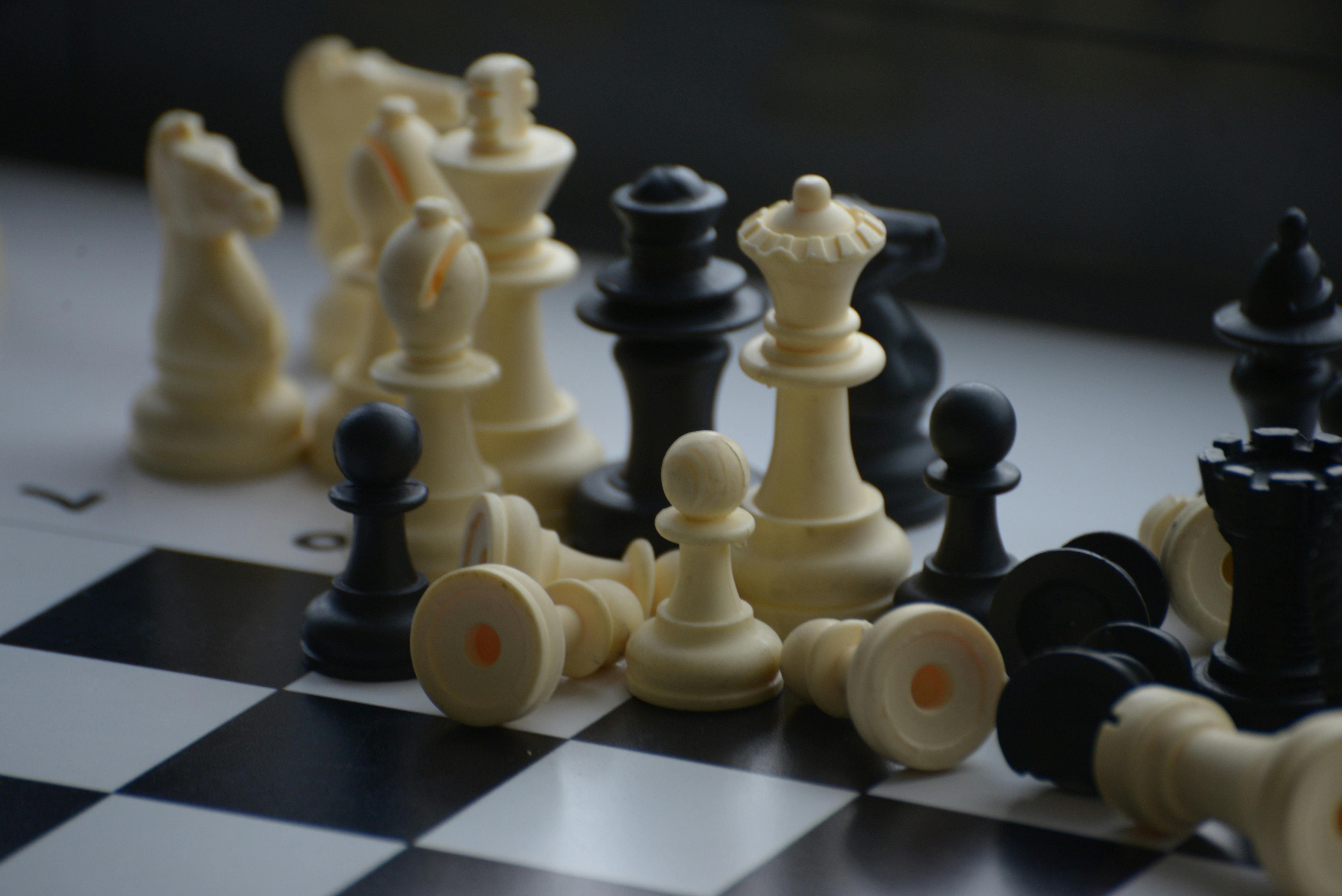
Are you tired of feeling like you're constantly playing catch-up in a world that moves at warp speed? Do you secretly yearn for a competitive edge, a hidden advantage that sharpens your mind not just for puzzles, but for the ruthless realities of career, finance, and everyday decision-making? What if the secret to unlocking unparalleled strategic thinking, risk assessment, and psychological mastery wasn't found in ancient board games, but in a dynamic arena where every move could mean triumph or disaster? Prepare to discover the game that's quietly forging titans of industry, savvier investors, and more confident leaders right under your nose.
🔥 What's Happening Right Now
In 2024, the landscape of success has fundamentally shifted. The old playbooks are gathering dust, and the traditional wisdom of "hard work equals reward" feels increasingly inadequate. We're living in an era defined by unprecedented information overload, lightning-fast market fluctuations, and a job market that demands not just skills, but an almost prescient ability to adapt, innovate, and make critical decisions under immense pressure. From navigating the complexities of the gig economy to making shrewd investment choices in volatile markets, the modern American needs more than just intelligence; they need strategic agility, psychological resilience, and a nuanced understanding of human behavior.
Many turn to classic brain games like chess, believing its intricate patterns will hone their minds. And while chess is undeniably a powerful mental exercise, it often falls short in preparing individuals for the real-world chaos we all face. Chess is a game of perfect information, where every piece's position is known, and the outcome, theoretically, can be calculated. But life, business, and finance are rarely so transparent. They are realms of incomplete information, hidden motives, and constantly shifting variables. This is where a new kind of mental training becomes not just beneficial, but absolutely essential. This is where the game we're about to reveal truly shines.
Across the United States, there's a growing undercurrent of individuals seeking to gain an edge, to move beyond conventional self-improvement tactics. They're looking for something that directly translates to navigating complex negotiations, making high-stakes financial decisions, and understanding the subtle cues that define human interaction. The rise of interest in behavioral economics, psychological insights, and practical decision-making frameworks underscores this trend. People aren't just looking for entertainment; they're actively seeking tools that build transferable skills for tangible success. This isn't about becoming a grandmaster of a board game; it's about becoming a master of your own destiny, equipped with a mind that can see opportunities and threats before anyone else.
Forget the static, predictable world of chess. We’re talking about a game that forces you to make calculated risks with imperfect information, read opponents’ intentions, manage a dynamic resource pool, and adapt your strategy on the fly. This game, often dismissed as mere gambling, is, in fact, a masterclass in applied psychology, probability, and strategic thinking. We’re talking about Texas Hold'em Poker. It’s not just a card game; it’s a high-octane simulation of real-world financial markets, business negotiations, and social dynamics. Its surging popularity isn't just for entertainment; it's because a growing number of astute individuals are recognizing its profound capacity to sharpen the exact mental faculties needed to thrive in today's cutthroat environment.
The beauty of Texas Hold'em lies in its blend of mathematical precision and human psychology. You're not just moving pieces; you're managing a bankroll, calculating pot odds, assessing implied odds, and making decisions based on incomplete data. More crucially, you're constantly observing your opponents – their betting patterns, their tells, their emotional states. This isn't a game against a computer algorithm; it's a dynamic battle of wits against other human beings, each with their own strategies, biases, and fears. This immersive, high-pressure environment forges a mind that is quick, decisive, and remarkably resilient. It’s no wonder that many successful entrepreneurs, investors, and executives quietly credit their poker experiences with honing their competitive edge.
💡 Financial Impact
The connection between mastering Texas Hold'em and achieving significant financial impact in the real world is far more direct and profound than most people realize. This isn't about winning money at the poker table (though that's a direct financial impact for some); it's about internalizing a suite of skills that are invaluable in any commercial or financial endeavor. Think of it as an intensive, real-time MBA in decision science, risk management, and behavioral finance, all rolled into one captivating game.
Firstly, **Risk Assessment and Management** is at the core of poker. Every decision in Texas Hold'em – from calling a bet to raising or folding – involves a precise calculation of risk versus reward. You learn to quantify probabilities (pot odds, implied odds), understand variance, and make choices that maximize your long-term expected value (EV), even if short-term outcomes are unfavorable. This skill directly translates to investment decisions, business ventures, and even career moves. Should you invest in that volatile stock? Should your startup pivot to a new market? Should you take that promotion with added responsibility? Poker trains your brain to systematically evaluate these scenarios, move beyond gut feelings, and base decisions on analytical frameworks, significantly reducing the likelihood of costly mistakes and increasing the probability of profitable outcomes.
Secondly, **Decision-Making Under Pressure with Incomplete Information** is a hallmark of both high-stakes poker and high-stakes business. In poker, you never know your opponents' exact cards, only their likely ranges based on their actions. This mirrors the real world, where market data is never fully comprehensive, competitor strategies are often opaque, and future economic conditions are uncertain. Poker players are constantly forced to make optimal decisions with limited data and under time constraints, often with real money on the line. This builds mental fortitude, reduces analysis paralysis, and cultivates the ability to trust your calculated judgments even when the outcome is uncertain. This is precisely the skill set that separates successful entrepreneurs and investors from those who hesitate or make emotional choices.
Thirdly, **Applied Psychology and Negotiation Skills** are paramount. Poker is as much about reading people as it is about reading cards. You learn to observe subtle "tells," understand betting patterns, and deduce your opponents' strength or weakness. You master the art of bluffing and detecting bluffs, understanding how to project confidence or weakness, and how to manipulate perception. These are not merely parlor tricks; they are crucial negotiation tactics. In a business deal, understanding the other party's leverage, their true motivations, and when they're bluffing can be the difference between a multi-million dollar contract and walking away empty-handed. In salary negotiations, knowing when to push and when to concede, and projecting an image of value and confidence, can significantly boost your earning potential. Poker teaches you to see beyond the surface, to understand the motivations driving human behavior in competitive environments.
Fourthly, **Resource Management and Capital Allocation** are constantly in play. Your chip stack in poker is your capital. You learn to manage it strategically, deciding when to invest heavily, when to conserve resources, and when to cut your losses. This directly parallels managing a business budget, allocating investment capital, or even managing personal finances. Knowing when to double down on a strong position and when to fold a weak hand, rather than throwing good money after bad, is a lesson drilled into every successful poker player. This discipline prevents catastrophic losses and promotes sustainable growth, whether at the table or in the market.
Finally, **Adaptability and Strategic Flexibility** are non-negotiable. No two poker hands or poker games are exactly alike. Opponents change, table dynamics shift, and your strategy must evolve constantly. This teaches a crucial lesson for navigating today's rapidly changing economic and technological landscape. Businesses that fail to adapt perish. Investors who stick to rigid strategies miss opportunities or suffer losses. Poker trains your brain to continuously analyze, adjust, and innovate, ensuring you remain agile and competitive in any financial or professional arena. The financial impact isn't just theoretical; it's a direct enhancement of the core competencies required to build wealth, secure lucrative careers, and make savvy financial decisions in the real world.
💰 Best Options in Comparison
If you're convinced that Texas Hold'em is the secret weapon for sharpening your brain for real-world success, the next question is: how do you get started, or how do you elevate your game? There are numerous pathways, each offering distinct advantages for different types of learners and commitment levels. We've broken down the best options, comparing them across key metrics to help you make an informed choice.
| Option | Cost | Learning Curve | Social Interaction | Skill Focus | Real-World Applicability |
|---|---|---|---|---|---|
| 1. Free Online Play & Mobile Apps (e.g., Zynga Poker, PokerStars Play Money) | Free (with optional in-app purchases) | Very Low (beginner-friendly) | Moderate (chat features) | Basic rules, hand rankings, simple betting patterns. | Fundamental understanding of game flow, very limited psychological depth. |
| 2. Dedicated Online Poker Platforms (e.g., PokerStars, GGPoker - real money) | Variable (from micro-stakes to high-stakes) | Moderate to High (competitive environment) | High (global player pool, forums) | Advanced strategy, probability, bankroll management, multi-table play, adapting to diverse opponents. | Excellent for risk assessment, decision-making under pressure, financial discipline, recognizing patterns. |
| 3. Live Home Games & Local Tournaments | Low to Moderate (buy-ins for games/tournaments) | Moderate (observing physical tells) | Very High (direct human interaction) | Reading physical tells, social dynamics, negotiation, emotional control, table talk. | Superior for developing negotiation, psychological insight, reading non-verbal cues, emotional intelligence. |
| 4. Poker Training Sites & Coaching (e.g., Upswing Poker, Run It Once) | High (subscription fees, hourly coaching rates) | Varies (structured learning for all levels) | Moderate (community forums, private coaching) | In-depth game theory, advanced math, opponent exploitation, mental game, post-game analysis. | The most direct path to developing elite strategic thinking, analytical prowess, and self-correction for complex real-world problems. |
| 5. Advanced Analytics Software (e.g., PokerTracker, Hold'em Manager) | Moderate (one-time purchase or subscription) | High (requires technical understanding) | Low (primarily self-study) | Data analysis, identifying leaks in your game, exploiting opponent tendencies based on statistics. | Exceptional for data-driven decision making, pattern recognition in large datasets, optimizing performance through objective analysis. |
For someone just starting out, **Option 1** is an excellent, low-risk entry point to grasp the basics. It’s accessible and fun, but the skills gained are foundational at best. As you progress and seek to genuinely leverage poker for real-world brain sharpening, **Option 2** offers a more competitive and realistic environment, pushing you to apply more sophisticated strategies and manage real (albeit small) stakes. This is where the financial discipline and risk assessment skills truly begin to solidify.
However, to unlock the full potential for psychological and negotiation mastery, **Option 3 – Live Home Games & Local Tournaments** – is indispensable. There’s no substitute for reading human behavior firsthand, observing physical tells, and engaging in direct social dynamics. This is where your emotional intelligence and ability to influence others will be put to the ultimate test, directly translating to superior performance in sales, leadership, and personal relationships.
For those truly committed to maximizing their strategic capabilities and financial acumen, combining **Option 2 or 3 with Option 4 (Training Sites & Coaching)** and **Option 5 (Analytics Software)** creates a powerful synergy. Training sites provide structured learning from experts, delving into complex game theory, optimal strategies, and the mental game. This is akin to getting advanced degrees in decision science. Analytics software, on the other hand, allows you to objectively analyze your own play and your opponents' tendencies, turning raw data into actionable insights – a skill invaluable in any data-driven industry or investment strategy. By strategically combining these options, you're not just playing a game; you're investing in a comprehensive, dynamic personal development program that pays dividends far beyond the poker table.
Conclusion
The quest for a competitive edge in today's demanding world is more urgent than ever. While traditional avenues of mental training have their merits, they often fall short in preparing us for the dynamic, information-poor, and psychologically charged environments of real-world success. It's time to shed the outdated notions and embrace a powerful, often misunderstood, tool for cognitive enhancement: Texas Hold'em Poker.
This isn't merely a game of chance or leisure; it's an intense crucible where risk assessment, strategic adaptability, psychological insight, and financial discipline are forged under pressure. The skills you cultivate at the poker table – the ability to make data-driven decisions with incomplete information, to read and influence human behavior, to manage resources effectively, and to adapt to constantly changing circumstances – are precisely the skills that underpin success in entrepreneurship, investing, career advancement, and navigating the complex currents of modern life.
By engaging with Texas Hold'em through any of the advanced options presented, you're not just learning to play cards; you're training your brain to become a more agile, resilient, and strategically brilliant instrument. You're investing in a skillset that will empower you to identify opportunities, mitigate risks, negotiate effectively, and ultimately, build a more prosperous and impactful future. So, forget the stale strategies of yesterday. It's time to deal yourself into a game that's secretly sharpening your brain for real-world triumph. The future belongs to the strategic thinkers, and your journey to becoming one starts now.