
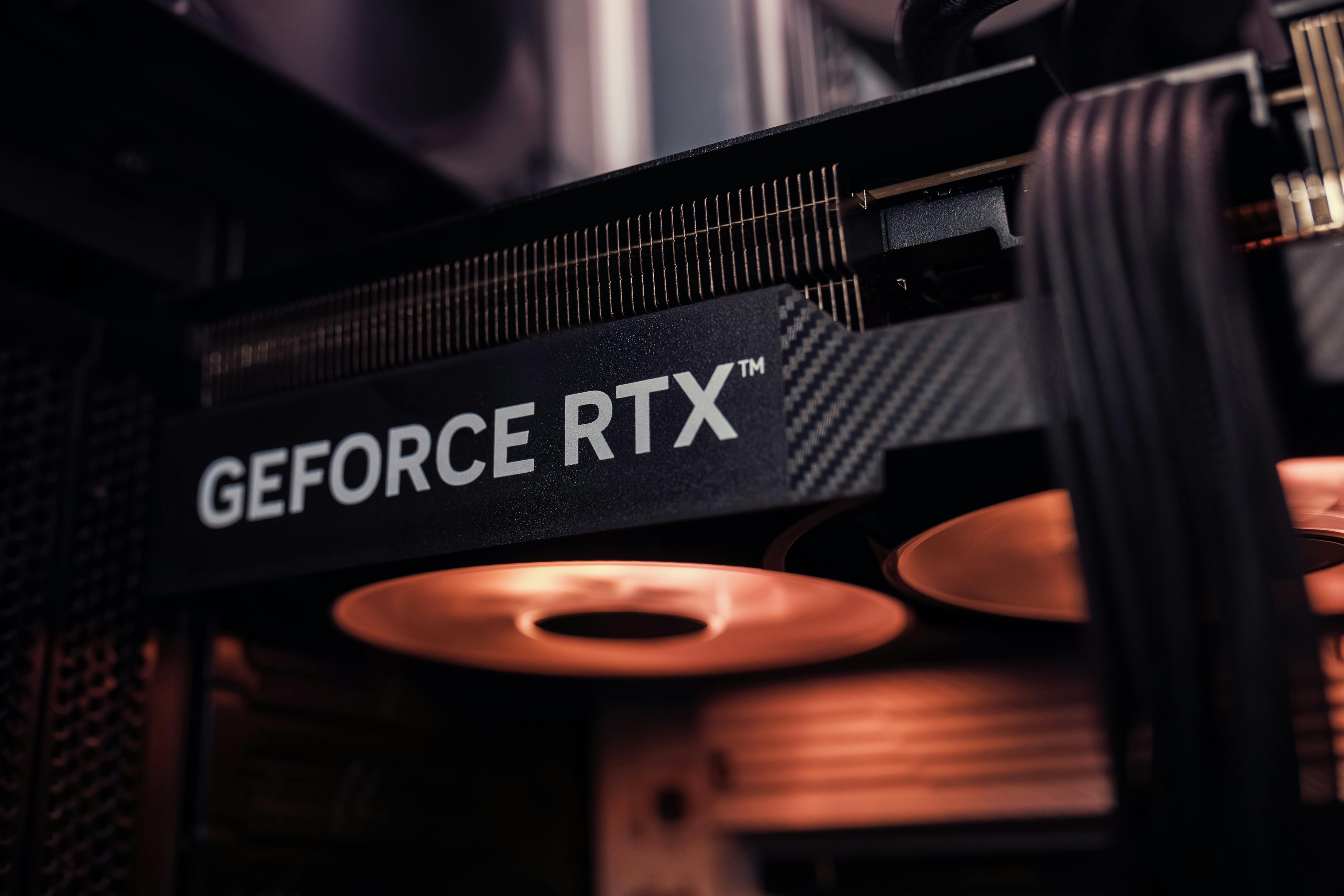
In 2026, AI-powered upscaling and frame generation technologies like NVIDIA's DLSS 4.0, AMD's FSR 4.0, and Intel's XeSS 3.0 are no longer luxuries but essential features for next-gen gaming GPUs. Discover how these intelligent innovations deliver unparalleled performance boosts, stunning visual fidelity, and future-proof your high-refresh-rate, ray-traced 4K gaming experience. Learn which graphics cards offer the best value for your upgrade and maximize your CPM/RPM with cutting-edge gaming hardware insights.
Introduction to the Topic
Welcome to 2026, gamers! If you're still thinking of raw horsepower as the sole determinant of your gaming experience, it's time for a paradigm shift. The relentless pursuit of higher resolutions, ultra-smooth frame rates, and breathtaking ray-traced visuals has pushed traditional GPU rendering to its limits. Enter Artificial Intelligence – not just as a buzzword, but as the fundamental technology revolutionizing how we experience games. By 2026, AI-powered upscaling and frame generation aren't just features; they are the bedrock upon which next-generation gaming performance and visual fidelity are built.
This year, choosing your next gaming GPU isn't just about shader cores and VRAM; it's about the intelligence baked into the silicon. Technologies like NVIDIA's DLSS 4.0, AMD's FSR 4.0, and Intel's XeSS 3.0 have matured into indispensable tools, leveraging dedicated AI hardware to deliver performance gains that would be impossible through brute force alone. For anyone looking to upgrade their PC, build a new gaming rig, or simply understand the future of interactive entertainment, comprehending these AI innovations is paramount. They unlock stunning 4K gaming at 120Hz+, make ray tracing universally accessible, and ultimately, provide unparalleled value for your hard-earned gaming budget.
Backgrounds & Facts
The core challenge for modern gaming is simple: rendering every single pixel at native 4K resolution, often coupled with demanding ray-traced lighting, shadows, and reflections, all while maintaining high refresh rates for competitive play or immersive single-player experiences. This demands an astronomical number of calculations per second. Even with advancements in manufacturing processes, traditional rasterization hits a wall.
This is where AI upscaling steps in. Instead of rendering a game at, say, native 4K (3840x2160 pixels), the GPU renders it at a lower resolution, perhaps 1080p or 1440p. Then, specialized AI algorithms, often running on dedicated hardware within the graphics card (like NVIDIA's Tensor Cores, AMD's RDNA AI Accelerators, or Intel's XMX Engines), take this lower-resolution image, analyze multiple frames of temporal data (information from previous frames), and intelligently reconstruct a higher-resolution image that often looks visually indistinguishable, or even superior, to a natively rendered one. This process fills in the missing pixel data with incredible accuracy, leveraging vast datasets of high-resolution images and videos to learn how to produce the best possible output.
Frame generation takes this a step further. While upscaling improves image quality and performance, frame generation actively creates entirely new, interpolated frames *between* the frames natively rendered by the GPU. This means if your GPU is rendering 60 frames per second (FPS), frame generation can insert another 60 AI-generated frames, effectively boosting your perceived FPS to 120. By 2026, the latency introduced by these generated frames has been significantly reduced, making the experience incredibly smooth and responsive, especially when paired with low-latency technologies like NVIDIA Reflex or AMD Anti-Lag.
The evolution has been rapid. From DLSS 1.0's early, sometimes blurry, output to DLSS 3.0's revolutionary frame generation, and AMD's FSR's impressive broad compatibility, we've seen exponential growth. In 2026, DLSS 4.0, FSR 4.0, and XeSS 3.0 represent the pinnacle of these technologies, offering near-native image quality, robust artifact suppression, and incredibly effective frame generation, making high-end gaming accessible to a wider range of hardware and budgets.
Expert Opinion / Analysis
“AI has become the new shader pipeline,” states Dr. Anya Sharma, lead analyst at FutureTech Gaming Research. “What was once an optional performance tweak is now an integral component of the graphics rendering stack. Developers in 2026 are designing games with AI upscaling and frame generation as a baseline expectation, allowing them to push visual boundaries with unprecedented fidelity, knowing that intelligent algorithms will ensure smooth performance across a range of hardware.”
The implications for game development are profound. Studios no longer have to make as many compromises between visual splendor and performance. They can implement more complex ray tracing, higher-resolution textures, and more sophisticated physics, confident that AI will bridge the performance gap. This frees up creative teams to innovate visually, leading to more immersive and breathtaking game worlds.
For consumers, this translates directly to better value. A mid-range GPU equipped with cutting-edge AI acceleration can now deliver performance that, just a few years ago, required top-tier, significantly more expensive hardware. It extends the lifespan of your gaming PC, allowing you to play the latest titles at high settings for longer. The 'arms race' among NVIDIA, AMD, and Intel to deliver the most efficient, highest-quality AI upscaling and frame generation solutions is a direct benefit to us, the gamers. Each new generation of GPUs brings more dedicated AI processing power, refined algorithms, and broader game support, ensuring that these technologies are not just theoretical but practical and impactful in virtually every new release.
While early iterations sometimes struggled with minor visual artifacts or input latency, advancements in 2026 have largely mitigated these concerns. Constant neural network training, improved temporal data handling, and tighter integration with game engines mean these AI features are now seamless and often imperceptible, offering a truly superior gaming experience.
💰 Best Options in Comparison (VERY IMPORTANT)
Choosing the right gaming GPU in 2026 means looking beyond raw specifications and focusing on the integrated AI capabilities. Here are the leading contenders from NVIDIA, AMD, and Intel, highlighting their strengths in the AI-accelerated gaming landscape:
-
NVIDIA GeForce RTX 60 Series (e.g., RTX 6080, RTX 6070)
NVIDIA continues to lead with its fifth generation of Tensor Cores, specifically designed for AI workloads. The RTX 60 Series, powered by DLSS 4.0, offers the most mature and visually impressive AI upscaling and frame generation solution. DLSS 4.0 not only refines image reconstruction to near-perfection but also introduces AI-driven asset enhancement, dynamically improving texture details and environmental elements in supported titles. When it comes to ray tracing performance, NVIDIA's architecture, combined with DLSS 4.0, remains the industry benchmark, delivering unparalleled visual fidelity with minimal performance impact. Their ecosystem, including NVIDIA Reflex for ultra-low latency and NVIDIA Broadcast for streamers, further solidifies their premium offering.
-
AMD Radeon RX 9000 Series (e.g., RX 9800 XT, RX 9700 XT)
AMD's Radeon RX 9000 Series, built on the RDNA 4/5 architecture, makes significant strides with FSR 4.0. While FSR remains an open standard, offering broader compatibility across various GPUs (even older generations and competitor hardware), the RX 9000 series introduces dedicated, powerful AI Accelerators that elevate FSR 4.0's performance and image quality to new heights. AMD focuses on a balanced approach, offering excellent raw rasterization performance coupled with highly competitive frame generation. FSR 4.0's temporal reconstruction is incredibly robust, making it a strong contender for value-conscious gamers who still demand top-tier performance and don't want to be locked into a proprietary ecosystem. AMD Anti-Lag and FidelityFX technologies complement their offering.
-
Intel Arc Battlemage/Celestial Series (e.g., Arc A700, Arc A500)
Intel's Arc Battlemage and the upcoming Celestial series represent a compelling third option, especially for the mid-range and budget segments. With XeSS 3.0 leveraging their dedicated XMX Engines, Intel has rapidly closed the gap in AI upscaling performance. XeSS 3.0 offers excellent image quality and solid frame generation, particularly when paired with Intel's own CPUs, creating a synergistic platform. While still maturing compared to its competitors, Intel's commitment to driver stability and performance optimizations, coupled with aggressive pricing, makes their Arc GPUs an increasingly attractive choice for PC builders looking for great performance per dollar, especially those loyal to the Intel ecosystem or seeking an accessible entry point into AI-accelerated gaming.
To help you make an informed decision, here's a detailed comparison of the key aspects:
| Feature | NVIDIA GeForce RTX 60 Series | AMD Radeon RX 9000 Series | Intel Arc Battlemage/Celestial |
|---|---|---|---|
| AI Upscaling Tech | DLSS 4.0 (Proprietary, HW-accel) | FSR 4.0 (Open Standard, HW/SW-accel) | XeSS 3.0 (Open Standard, HW-accel) |
| Dedicated AI Hardware | 5th Gen Tensor Cores | RDNA 4/5 AI Accelerators | XMX Engines |
| Image Quality (AI) | Excellent (often superior to native) | Very Good (near-native clarity) | Good to Very Good (rapidly improving) |
| Frame Gen Performance | Industry-leading FPS gains | Excellent FPS gains, low latency | Solid FPS gains, improving latency |
| Ray Tracing Prowess | Unrivaled performance & quality | Strong, highly competitive | Improving rapidly with each generation |
| Ecosystem Features | NVIDIA Reflex, Broadcast, Creator Suite | AMD Anti-Lag, FidelityFX, Smart Access Memory | XeSS, Driver Stability, Intel Arc Control |
| Price Tier | Premium (Enthusiast to High-End) | High-Mid Range (Excellent Value) | Mid-Range / Budget (Performance per dollar) |
| Best For | Enthusiasts, competitive gamers, content creators, max visual fidelity | Value-conscious gamers, open-standard advocates, raw performance seekers | Budget-focused builders, Intel CPU users, emerging tech adopters |
Outlook & Trends
The trajectory of AI in gaming hardware shows no signs of slowing down. By the end of the decade, we can expect even deeper integration of AI. Future GPUs might feature even more specialized AI cores, capable of not just upscaling and frame generation, but also real-time AI-driven physics, character behavior, and even procedural content generation on the fly. Imagine game worlds that dynamically evolve based on your playstyle, or NPCs with truly adaptive intelligence – all accelerated by your graphics card's AI capabilities.
We're also seeing a trend towards AI integration directly into CPUs (APUs with robust AI accelerators). This could lead to a future where even integrated graphics solutions offer impressive AI-boosted performance, making high-quality gaming accessible on even more modest hardware or thin-and-light laptops. Universal, open-source AI upscaling standards could also emerge, further democratizing access to these powerful technologies.
Furthermore, AI upscaling is a game-changer for cloud gaming services. By rendering games at lower resolutions on server-side hardware and then upscaling them before streaming, cloud platforms can deliver higher perceived visual quality with significantly less bandwidth, making high-fidelity gaming via the cloud a smoother, more reliable experience for millions.
Finally, the sustainability aspect cannot be overlooked. By achieving higher effective performance with less raw rendering, AI upscaling contributes to more energy-efficient gaming. This means less power consumption for the same stunning visuals, aligning with a growing industry push for eco-friendly hardware.
Conclusion
In 2026, the message is clear: AI-powered upscaling and frame generation are not just optional extras; they are the beating heart of modern gaming GPUs. For anyone looking to build, upgrade, or simply understand the cutting edge of gaming hardware, prioritizing graphics cards with robust, dedicated AI acceleration is critical. Whether you opt for the refined excellence of NVIDIA's DLSS 4.0, the open and powerful FSR 4.0 from AMD, or the rapidly advancing XeSS 3.0 from Intel, embracing these intelligent technologies ensures you're future-proofing your rig for years to come.
The future of gaming isn't just about rendering more pixels; it's about intelligently creating them. Invest wisely in an AI-accelerated GPU, and prepare to experience games with unparalleled performance, stunning visual fidelity, and an immersive quality that was once thought impossible. Your next epic adventure deserves an intelligent graphics card – make sure you choose one that's ready for 2026 and beyond!