
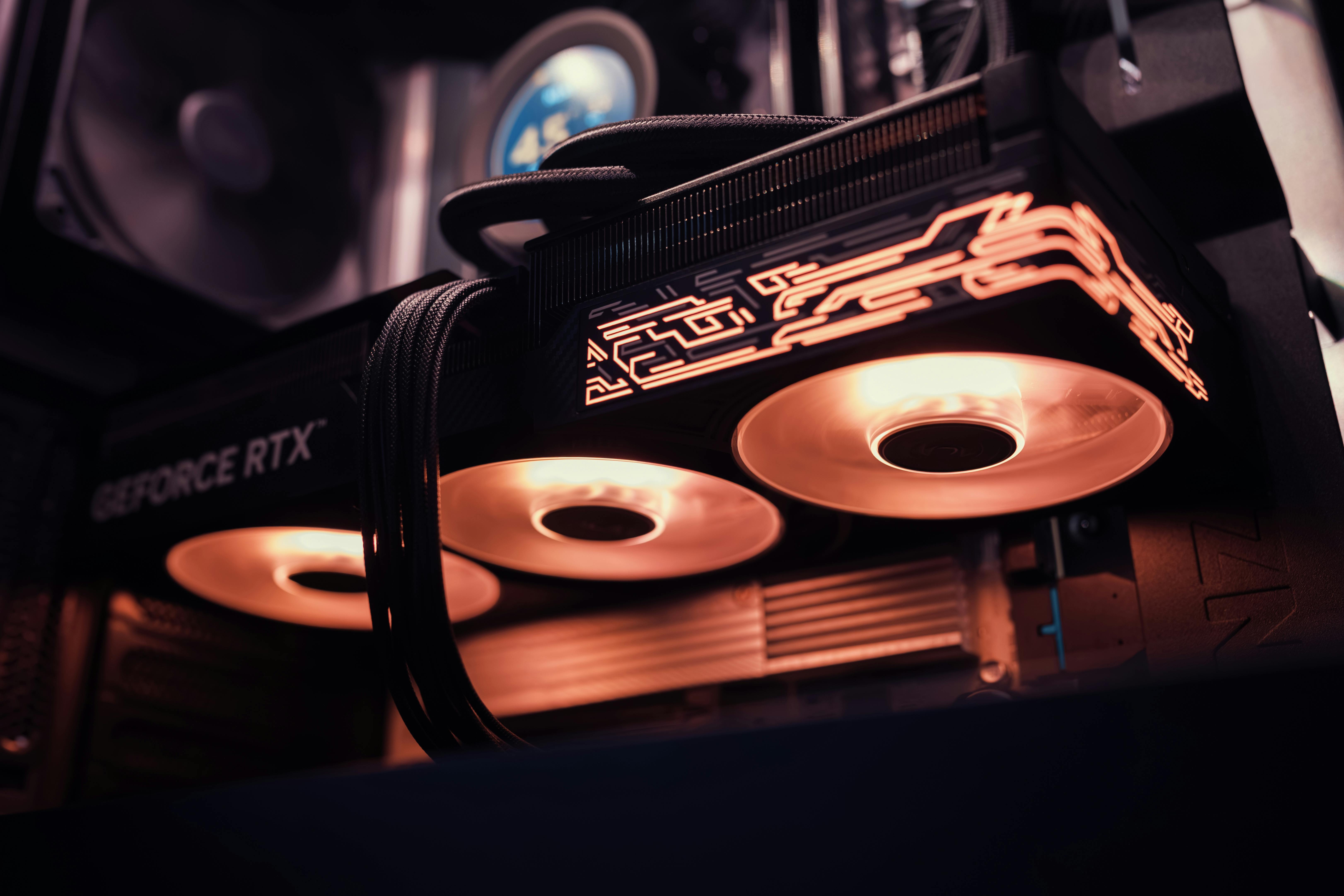
Unlock peak gaming performance in 2026 with our deep dive into the latest AI Upscaling and Frame Generation technologies. Compare NVIDIA DLSS 4.0, AMD FSR 4.0, and Intel XeSS Next-Gen to find the best GPU solution for your gaming PC, boost your FPS, and experience stunning visuals without compromise. Your ultimate guide to next-gen gaming hardware for maximum visual fidelity and frame rates.
Introduction to the Topic
Welcome to 2026, gamers! The landscape of interactive entertainment has never been more visually stunning or technically demanding. As games push the boundaries with hyper-realistic ray tracing, complex physics, and expansive open worlds, our GPUs are constantly under pressure to deliver buttery-smooth frame rates at high resolutions. For years, the dream of 4K gaming at 144Hz or even 8K at playable frame rates remained just that – a dream for most. But thanks to the relentless innovation in AI-powered upscaling and frame generation, that dream is now a vibrant reality for a broad spectrum of PC gamers.
This year, the battle for your frames per second (FPS) is more intense than ever, with NVIDIA’s DLSS 4.0, AMD’s FSR 4.0, and Intel’s XeSS Next-Gen leading the charge. These aren't just minor updates; they represent a significant leap in how our hardware renders games, effectively delivering 'free performance' without substantial hardware upgrades. For anyone looking to build a new gaming PC, upgrade their existing rig, or simply understand the cutting edge of gaming hardware, mastering these technologies is paramount. Join searchgamex.com as we dissect the titans of AI upscaling and help you make the smartest purchasing decisions for your ultimate gaming experience.
Backgrounds & Facts
The concept of rendering games at a lower resolution and then intelligently upscaling them to your monitor's native resolution isn't new. However, the advent of Artificial Intelligence and dedicated hardware acceleration has revolutionized this process. Traditional upscaling often resulted in blurry images or noticeable artifacts. Modern AI upscaling, however, uses sophisticated neural networks trained on vast datasets of high-resolution and low-resolution images to predict and reconstruct missing pixel data, creating an image that often looks better than native low-resolution rendering, and sometimes indistinguishable from native high-resolution rendering.
NVIDIA pioneered this with DLSS (Deep Learning Super Sampling) in 2018, leveraging the Tensor Cores in their RTX GPUs. Since then, DLSS has evolved through multiple iterations, integrating advanced temporal feedback and, crucially, frame generation. Frame generation, a more recent innovation, uses AI to *create* entirely new frames between traditionally rendered frames, effectively doubling or even tripling your perceived frame rate. This is where the 'magic' truly happens, transforming previously unplayable scenarios into smooth, responsive experiences.
AMD entered the fray with FSR (FidelityFX Super Resolution), an open-source alternative that initially focused on spatial upscaling, making it compatible with a wider range of GPUs, including older generations and even competitor hardware. While initially not leveraging dedicated AI cores, FSR has rapidly evolved, incorporating temporal data and, by 2026, advanced frame generation techniques that rival its competitors in quality and performance. Intel, with its XeSS (Xe Super Sampling) technology, also joined the race, utilizing its dedicated XMX AI acceleration units in Arc GPUs while also offering a more generalized solution compatible with other vendors.
The driving force behind this rapid evolution is the increasing demand of modern game engines. Ray tracing, once a niche feature, is now becoming standard in AAA titles, pushing GPU requirements to unprecedented levels. Higher resolution monitors (4K, 8K) and high refresh rates (144Hz, 240Hz+) have also become more accessible, creating a bottleneck that only AI upscaling and frame generation can truly alleviate without requiring prohibitively expensive hardware. These technologies are no longer just 'nice-to-haves'; they are essential components of any high-performance gaming setup in 2026.
Expert Opinion / Analysis
According to Dr. Evelyn Reed, lead analyst at 'Digital Frontiers Gaming Tech,' the current generation of AI upscaling and frame generation is nothing short of a paradigm shift. “In 2026, we’re seeing these technologies mature to a point where the visual compromises are almost negligible for most users, especially at resolutions 1440p and above,” she states. “The key innovation isn't just generating more frames, but doing so with incredibly low latency and high fidelity. NVIDIA's DLSS 4.0, for instance, is leveraging truly predictive AI models that anticipate player input and game state, further reducing the perceived input lag that plagued earlier frame generation implementations. This is crucial for competitive gamers who previously shunned these features.”
The open-source nature of AMD's FSR 4.0 continues to be a significant advantage for market penetration. “AMD’s commitment to broad hardware compatibility with FSR 4.0 means that an even larger segment of the gaming population can benefit from these performance boosts,” explains gaming hardware reviewer Mark Chen of 'Pixel Pundits.' “While the absolute peak image quality might still lean slightly towards NVIDIA in some demanding scenarios, FSR 4.0 has closed the gap dramatically. Its frame generation is now incredibly robust, and the ability to run it on older GPUs or even integrated graphics makes it a powerful equalizer.”
Intel's XeSS Next-Gen, particularly with their latest Battlemage architecture, is positioned as a strong contender. “Intel’s approach with XeSS Next-Gen is fascinating,” notes industry insider Sarah Jenkins. “By refining their XMX engines and optimizing their algorithms, they’re offering a highly competitive solution that provides excellent performance gains and image quality, often punching above its weight class. For gamers building a value-oriented or mid-range PC, Intel Arc GPUs with XeSS Next-Gen present a very compelling package, especially given their increasing market share and growing game support.”
The consensus among experts is clear: these technologies are no longer optional. They are integral to experiencing the latest games at their best. The choice now largely depends on your existing hardware ecosystem, budget, and specific priorities regarding raw performance, image quality, and hardware compatibility.
💰 Best Options in Comparison (VERY IMPORTANT)
Choosing the right AI upscaling and frame generation technology is crucial for optimizing your gaming experience in 2026. Each major player offers a compelling solution, tailored to different hardware ecosystems and user preferences. Here’s a breakdown of the leading options:
- NVIDIA DLSS 4.0 (for GeForce RTX 50-series and newer): The undisputed leader in AI-driven performance. DLSS 4.0, powered by the latest generation of Tensor Cores and new dedicated 'AI Cores' within the RTX 50-series (e.g., Blackwell architecture), offers unparalleled image quality and the highest potential performance uplift. Its advanced predictive frame synthesis significantly reduces latency, making frame generation viable even for competitive gaming. Tightly integrated with NVIDIA Reflex for end-to-end system latency reduction, it’s the premium choice for gamers seeking the absolute best visuals and lowest latency with ray tracing enabled.
- AMD FSR 4.0 (for RDNA 4 and wider compatibility): AMD's open-source powerhouse continues to champion accessibility. FSR 4.0 represents a monumental leap, offering highly competitive image quality and substantial frame generation capabilities across a vast array of GPUs, including older AMD Radeon cards, NVIDIA GeForce, and Intel Arc. While its core philosophy remains open and hardware-agnostic, the RDNA 4 architecture (e.g., Radeon RX 8000 series) further optimizes its performance and fidelity. It's the ideal choice for gamers who prioritize broad compatibility and excellent performance without being locked into a single vendor's ecosystem.
- Intel XeSS Next-Gen (for Intel Arc Battlemage and beyond): Intel's commitment to the discrete GPU market has paid off handsomely with XeSS Next-Gen. Leveraging enhanced XMX AI acceleration units in their Battlemage architecture, XeSS Next-Gen delivers a robust combination of performance and image quality that is highly competitive, especially in the mid-range segment. It also offers broad compatibility, running effectively on competitor hardware. For those building a new system around Intel Arc GPUs or looking for a compelling value proposition, XeSS Next-Gen is an increasingly strong contender.
To help you compare these cutting-edge technologies, here’s a detailed HTML table:
| Feature / Technology | NVIDIA DLSS 4.0 (RTX 50-series) | AMD FSR 4.0 (RDNA 4) | Intel XeSS Next-Gen (Battlemage) |
|---|---|---|---|
| Core Principle | AI-driven Temporal Upscaling & Predictive Frame Synthesis | Advanced Spatial/Temporal Upscaling & Frame Interpolation (Open Standard) | AI-accelerated Upscaling & Frame Generation |
| Hardware Required | NVIDIA RTX 50-series (or newer) for optimal experience | AMD RDNA 2+ (Optimal RDNA 4), NVIDIA, Intel (broadest compatibility) | Intel Arc Battlemage+ (optimal), NVIDIA, AMD |
| Image Quality | Exceptional, minimal artifacts, strongest temporal stability | Very Good, significantly improved temporal consistency, near-native clarity | Good-Very Good, competitive clarity, robust artifact handling |
| Performance Uplift | Highest potential gains (2-4x+ depending on game/settings) | High gains (1.8-3x+ depending on game/settings) | Good gains (1.5-2.5x+ depending on game/settings) |
| Latency Impact | Minimized with AI-prediction and Reflex integration, lowest overall | Moderate, significantly improved with FSR 4.0 optimizations and Anti-Lag+ | Moderate, improving with XeSS Next-Gen optimizations and latency reduction tech |
| Game Support | Extensive and growing rapidly in AAA titles | Widest adoption due to open-source nature, growing rapidly | Growing, strong support in new titles, especially with Intel's market presence |
| Best For | High-end RTX users, demanding ray tracing, competitive play, absolute best visuals | Broad compatibility, value-focused upgrades, open-source proponents, all-around good performance | Mid-range builds, Intel Arc users, balanced performance and value, growing ecosystem |
Outlook & Trends
The future of AI upscaling and frame generation in 2026 and beyond looks incredibly bright. We can expect even deeper integration into game engines, potentially becoming a foundational layer of how games are rendered, rather than an optional setting. Further advancements in AI models will likely lead to even more realistic frame generation, where the generated frames are virtually indistinguishable from natively rendered ones, even under intense scrutiny.
One major trend is the ongoing effort to reduce latency. As frame generation becomes more sophisticated, minimizing input lag will be paramount, especially for competitive gaming. We’ll see more hardware-level optimizations, tighter API integrations, and potentially even AI-driven latency compensation built directly into the GPU pipeline. Furthermore, these technologies are not just for traditional gaming. Their application in VR/AR, professional visualization, and even cloud gaming (where bandwidth and rendering efficiency are critical) is poised for massive expansion.
Another exciting development is the potential for cross-platform standardization. While proprietary solutions like DLSS maintain a lead due to dedicated hardware, the open-source nature of FSR continues to push for a more unified approach. It's plausible that future iterations might see a convergence of ideas, or even a universally adopted open standard that all vendors can optimize for, leading to even broader adoption and easier developer integration. The ultimate goal is seamless, high-performance visuals for every gamer, regardless of their chosen hardware.
Conclusion
In 2026, AI upscaling and frame generation are no longer luxuries; they are fundamental pillars of modern PC gaming. Whether you're chasing the highest frame rates in competitive shooters, immersing yourself in visually breathtaking single-player epics with ray tracing, or simply trying to get the most out of your existing hardware, these technologies are your best allies. NVIDIA's DLSS 4.0 offers the pinnacle of AI-driven fidelity and performance for RTX users. AMD's FSR 4.0 provides unparalleled compatibility and rapidly closing performance gaps for a wider audience. Intel's XeSS Next-Gen, with its Battlemage architecture, delivers a strong, balanced option for the mid-range and beyond.
Your choice will depend on your specific GPU, budget, and priorities. However, one thing is certain: embracing these innovations is essential for future-proofing your gaming experience. Don't just settle for good visuals; demand exceptional performance. Upgrade your knowledge, upgrade your hardware, and get ready to experience games like never before. The future of gaming is here, and it’s powered by AI.