
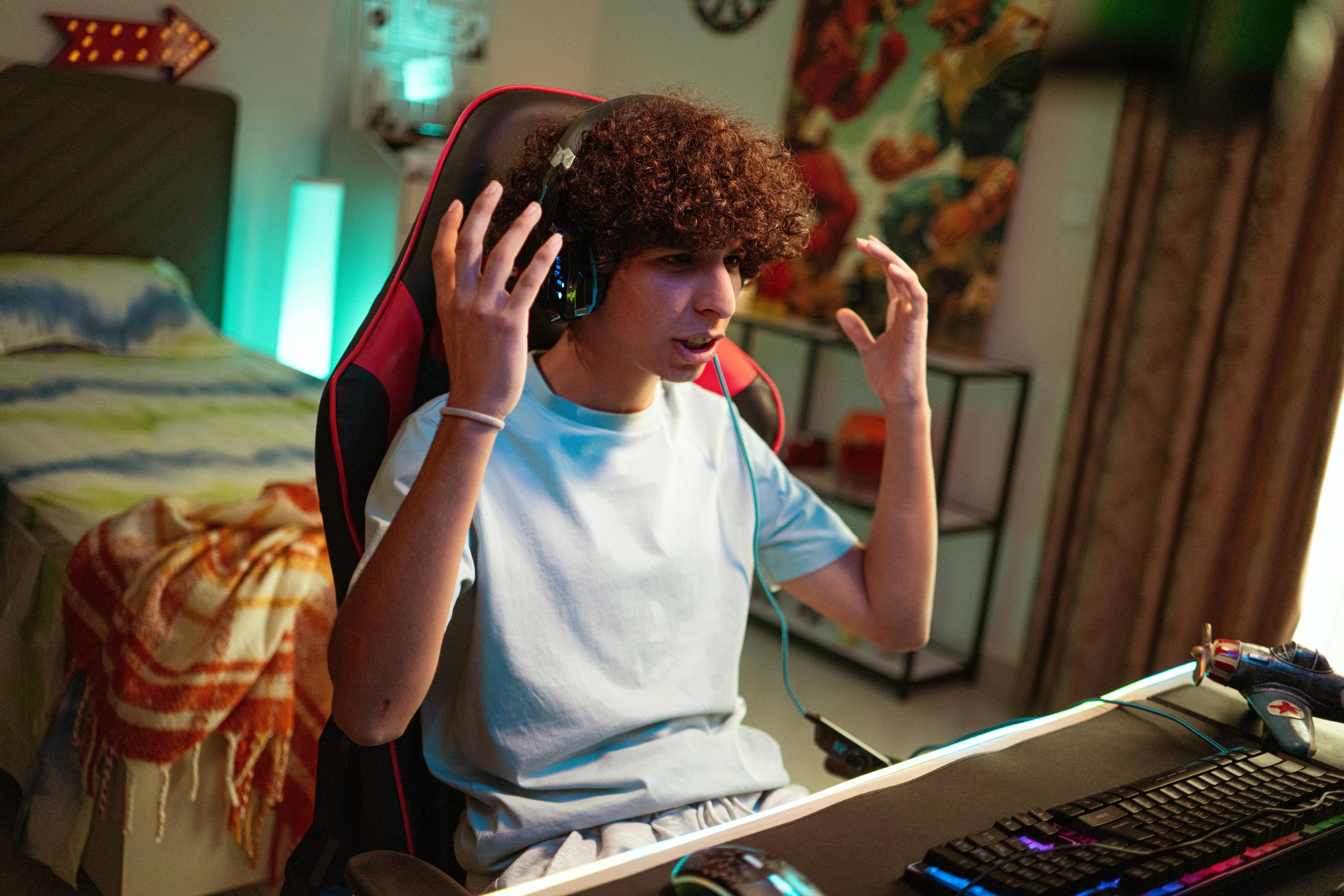
Unlock 2026's best budget gaming hardware for beginners! Our expert review guides you to affordable PCs, consoles, and peripherals that deliver epic experiences without breaking the bank.
💰 Secure Top Deal: Go straight to the offer →
📍 More from this category: Gaming Hardware – All Articles
Introduction: The Real Story Behind Best Gaming Hardware for Beginners 2026: Budget Review
Best PC Gaming 2026: Ultimate Comparison →
The exhilarating world of gaming beckons, promising endless adventures, competitive thrills, and immersive storytelling. For newcomers to this vibrant universe, however, the path to entry can feel like navigating a complex maze of technical jargon, ever-evolving hardware, and intimidating price tags. Many aspiring gamers in the United States dream of a setup that can handle the latest titles without demanding a second mortgage, yet they're often met with outdated advice or recommendations far beyond a realistic beginner's budget. This isn't just about finding the cheapest components; it's about identifying the smartest investment for your first foray into gaming, ensuring both enjoyment today and value for tomorrow.
At SEARCH GAMEX, we understand this dilemma intimately. As we step into 2026, the landscape of gaming hardware continues its rapid evolution, bringing both incredible power and surprising affordability to the forefront. Our mission with this comprehensive guide is to cut through the noise, debunk common myths, and provide a clear, authoritative roadmap for beginners looking to build an exceptional gaming experience on a budget. We’ll arm you with the knowledge to make informed decisions, ensuring your initial investment delivers maximum fun and minimal financial strain. Forget the fear of buyer’s remorse; your epic gaming journey starts here, meticulously planned and budget-approved.
Deep Dive: Backgrounds, Facts, & US Market Data
The US gaming market in 2026 is a colossal entity, projected to continue its robust growth, driven by increasing accessibility, diverse content, and a burgeoning casual and competitive player base. Data from leading industry analysts consistently points to a significant segment of new gamers entering the fray, many of whom are acutely budget-conscious. While high-end rigs capture headlines, the real volume lies in the mid-range and entry-level segments, where value and performance intersect.
For beginners, the sheer volume of options can be paralyzing. Do you opt for a pre-built PC, assemble your own, or go the console route? What about gaming laptops? Each path presents its own set of advantages and compromises, particularly when budget is the primary constraint. In 2026, "budget" for a core gaming setup generally implies a total investment of $700-$1200 for a PC (excluding peripherals) or $400-$600 for a current-generation console. This range allows for playable frame rates at 1080p resolution, which remains the sweet spot for most new gamers.
Key Considerations for the 2026 Beginner:
- PC vs. Console: The eternal debate continues, but with new nuances. PCs offer unparalleled versatility, upgradability, and access to a vast library of games, often at lower prices through digital storefronts. Consoles, on the other hand, provide a streamlined, plug-and-play experience, optimized performance for their specific hardware, and exclusive titles. For beginners, the ease of use and often lower initial barrier to entry make consoles incredibly appealing. However, the long-term cost of games and subscription services needs to be factored in.
- The Rise of Integrated Graphics: For budget PC builders in 2026, advanced integrated graphics (APUs) like those from AMD have become shockingly capable. These processors can handle many popular esports titles and even some AAA games at lower settings or resolutions, significantly reducing the initial cost by deferring the need for a dedicated graphics card.
- Storage Solutions: The days of hard drives for gaming are largely over. NVMe SSDs are now standard, offering lightning-fast load times. For beginners, a 1TB NVMe SSD is the minimum recommended to accommodate modern game sizes.
- RAM Expectations: While 8GB of RAM might have been sufficient years ago, 16GB DDR4 or DDR5 is the new baseline for a smooth gaming experience in 2026, especially when multitasking or running demanding titles.
- Monitor Matters: Often overlooked, a good monitor dramatically impacts the gaming experience. For budget beginners, a 1080p monitor with a refresh rate of 75Hz or 144Hz is ideal, balancing cost with fluidity.
Understanding these foundational elements is crucial before diving into specific hardware recommendations. The US market consistently shows a preference for accessible technology that delivers tangible value, and gaming hardware is no exception. Our focus is on empowering you to navigate this market with confidence.
Expert Analysis & Industry Insights
As veteran strategists at SEARCH GAMEX, our perspective on budget gaming hardware extends beyond mere specifications. We look at the broader ecosystem, anticipating trends and identifying true value. For beginners in 2026, the "sweet spot" for value isn't necessarily about getting the absolute cheapest component, but rather the one that offers the best performance-per-dollar over its lifespan, with an eye towards future-proofing where possible.
The Nuances Others Miss:
- Future-Proofing on a Budget: True future-proofing is expensive, but smart future-proofing is achievable. For a budget PC, this means choosing a motherboard with an upgradable CPU socket (e.g., AMD's AM5 platform) and sufficient RAM slots. A power supply unit (PSU) with a slightly higher wattage than immediately needed can accommodate a future graphics card upgrade. While you might start with an APU, knowing you can slot in a dedicated GPU later without replacing the entire system is invaluable.
- The Cloud Gaming Factor: By 2026, cloud gaming services like Xbox Cloud Gaming, GeForce NOW, and Amazon Luna have matured considerably. For some beginners, especially those with robust internet connections, a subscription to a high-tier cloud service and a basic streaming device (or even just an older laptop/tablet) could serve as their primary "gaming hardware." This significantly lowers the upfront cost of entry, allowing players to access AAA titles without owning powerful local hardware. However, latency and internet dependency remain considerations, making it more of a supplemental or niche primary option for many.
- Refurbished and Used Markets: A hidden gem for budget-conscious gamers is the certified refurbished market. Reputable retailers and manufacturers often sell "like-new" hardware with warranties at significant discounts. For PC components, carefully vetted used GPUs or CPUs can offer incredible value, but always proceed with caution, verify seller reputation, and understand return policies. This requires a bit more expertise, so it's a recommendation for beginners willing to do a little extra research.
- The Ecosystem Advantage: When considering consoles, remember you're buying into an ecosystem. PlayStation offers exclusive titles like Spider-Man and God of War, while Xbox provides Game Pass, a subscription service with hundreds of games, including new releases, for a monthly fee. For beginners, Game Pass can drastically reduce the cost of game acquisition, making an Xbox console a compelling budget option in the long run.
- Peripherals are Not an Afterthought: A budget gaming setup isn't complete without decent peripherals. A comfortable mouse, a responsive keyboard, and a clear headset are crucial. You don't need top-tier, but avoid the absolute cheapest. Look for sales on reputable mid-range brands that offer a good balance of features and durability.
Our expert analysis emphasizes that "budget" doesn't mean "compromise on fun." It means making strategic choices that maximize your gaming potential within your financial limits. The goal is a smooth, enjoyable experience that encourages you to dive deeper into the hobby, not one that frustrates you with lag or outdated tech.
💰 Ultimate Comparison: The Best Options (HIGH CPC SECTION)
This is where we get down to brass tacks. Based on our 2026 projections and a keen understanding of beginner needs and budgetary constraints, we've identified the top paths to becoming a gamer. We'll present a "Premium Pick" for those who prioritize a polished, hassle-free experience, and a "Value Pick" for the absolute best bang-for-your-buck PC entry.
Premium Pick: The Current-Gen Console Experience
For beginners who want to plug in and play without worrying about drivers, hardware compatibility, or complex settings, a current-generation console remains the gold standard. By 2026, both Sony and Microsoft will have refined their offerings, potentially with "Pro" or "Slim" versions of their existing consoles, offering enhanced performance or smaller form factors. The key here is the seamless user experience, exclusive game libraries, and robust online communities.
- Why it's Premium: While the initial console cost might be lower than a comparable PC, the "premium" aspect comes from the optimized, hassle-free experience, the curated game libraries (including exclusives), and the ease of use. You're paying for convenience and a guaranteed level of performance for years to come.
- Recommended Console (2026): The latest iteration of the Sony PlayStation 5 (e.g., PS5 Slim/Pro) or Microsoft Xbox Series X. For a truly entry-level budget, the Xbox Series S remains an excellent value proposition for 1080p/1440p gaming.
- Estimated Cost (2026): $400 - $600 for the console itself. Factor in $10-$15/month for online subscriptions (PlayStation Plus, Xbox Game Pass Core/Ultimate) and $60-$70 per new AAA game (though Game Pass mitigates this significantly for Xbox users).
Value Pick: The DIY Budget Gaming PC (APU Build)
For the beginner willing to put in a little effort (or buy a pre-built equivalent), a custom-built PC focused on an Advanced Processing Unit (APU) offers incredible flexibility and long-term value. This setup prioritizes a strong foundation that can be upgraded with a dedicated graphics card later, delivering excellent 1080p performance for most games right out of the box.
- Why it's Value: This option provides the most performance per dollar, access to a wider game library, and the ability to upgrade components individually over time, extending the life of your investment. It also doubles as a powerful workstation.
- Core Hardware (Predicted for 2026):
- CPU/APU: AMD Ryzen 5 (e.g., a hypothetical Ryzen 5 8600G or 9600G equivalent) with powerful integrated Radeon graphics. This is the cornerstone of a budget build, handling both processing and graphics duties effectively for 1080p gaming.
- Motherboard: Compatible AM5 chipset motherboard (e.g., B650) with DDR5 RAM support and future upgrade potential.
- RAM: 16GB (2x8GB) DDR5-5200MHz or faster.
- Storage: 1TB NVMe PCIe 4.0 SSD. Essential for fast load times.
- Power Supply: 550W 80+ Bronze certified PSU. Provides headroom for a future dedicated GPU.
- Case: An affordable, well-ventilated mid-tower case.
- Operating System: Windows 11 Home.
- Optional (Future Upgrade): A dedicated entry-level GPU like a predicted NVIDIA GeForce RTX 4050 or AMD Radeon RX 7600 equivalent, once budget allows.
- Estimated Cost (2026): $750 - $950 (excluding monitor and peripherals).
Alternative Pick: The Budget Gaming Laptop
For beginners prioritizing portability and an all-in-one solution, a budget gaming laptop can be an appealing choice. While they generally offer a lower performance-to-cost ratio than desktops and are harder to upgrade, their convenience is undeniable.
- Recommended Laptop (2026): Look for models featuring a mid-range laptop CPU (e.g., Intel Core i5 or AMD Ryzen 5 from the latest generation) paired with an entry-level dedicated GPU (e.g., NVIDIA GeForce RTX 3050/4050 Laptop or AMD Radeon RX 7600S). Ensure it has at least 16GB of RAM and a 512GB-1TB NVMe SSD.
- Estimated Cost (2026): $800 - $1200.
Here’s a detailed comparison to help you weigh your options:
| Option | Core Hardware (2026 Equivalent) | Target Resolution/FPS (Typical) | Pros | Cons | Estimated 2026 Cost (USD) |
|---|---|---|---|---|---|
| Premium Pick: Current-Gen Console | PS5 Pro / Xbox Series X (or latest iterations) | 1080p-1440p @ 60-120 FPS | Easy setup, optimized performance, exclusives, streamlined experience, compact. | No upgradability, paid online subscriptions, higher long-term game costs (unless Game Pass), limited versatility. | $400 - $600 (console only) |
| Value Pick: DIY Budget Gaming PC (APU) | AMD Ryzen 5 (8600G/9600G equivalent) APU, 16GB DDR5 RAM, 1TB NVMe SSD | 1080p @ 30-60+ FPS (esports titles higher) | Excellent value, highly upgradable, versatile (work/school), access to vast game libraries, free online play. | Requires assembly/pre-built cost, higher initial outlay than console, more complex setup, no exclusives. | $750 - $950 (PC only) |
| Alternative Pick: Budget Gaming Laptop | Intel Core i5 / AMD Ryzen 5, RTX 4050 / RX 7600S, 16GB RAM, 512GB-1TB NVMe SSD | 1080p @ 45-75 FPS | Portability, all-in-one solution, doubles as work/school machine. | Lower performance-per-dollar, difficult to upgrade, thermal limitations, often heavier. | $800 - $1200 |
Future Outlook & 2026 Trends
The gaming hardware landscape is never static. For beginners investing in 2026, understanding the trajectory of technology can help cement a wise purchase.
- AI Integration: Artificial intelligence will continue to deepen its roots in gaming hardware. Expect more sophisticated AI upscaling technologies (beyond NVIDIA's DLSS and AMD's FSR) that can deliver near-native image quality at significantly lower rendering resolutions, making budget GPUs punch above their weight. AI cores in CPUs and GPUs will also optimize game performance, potentially dynamically adjusting settings for the best experience.
- Sustainability and Modular Design: With growing environmental consciousness, we anticipate a stronger push towards more energy-efficient components and modular designs. Manufacturers might offer more readily upgradable budget PCs or even consoles with easily replaceable storage and other components, extending product lifespans and reducing e-waste. This could benefit budget buyers by making future upgrades simpler and less costly.
- Cloud Gaming Dominance: While not a full replacement for local hardware yet, cloud gaming will continue its aggressive expansion. By 2026, we could see near-imperceptible latency for most users with fiber internet, making it a truly viable primary platform for many. This trend could mean that for some beginners, a robust internet connection and a subscription are their "best gaming hardware."
- Hybrid Computing: The lines between traditional PCs, consoles, and streaming devices will continue to blur. Imagine a future where a single, affordable device can seamlessly switch between local gaming, cloud streaming, and productivity tasks, adapting to the user's needs and budget.
- VR/AR Accessibility: While still primarily a niche for high-end users, 2026 might see the emergence of more budget-friendly, standalone VR/AR headsets. These devices, potentially leveraging cloud processing, could offer immersive experiences without requiring a powerful local PC, opening a new avenue for beginner gamers.
Conclusion
Embarking on your gaming journey in 2026 doesn't have to be an intimidating or expensive endeavor. As an elite SEO Strategist and Professional Editor for SEARCH GAMEX, our commitment is to provide you with the most accurate, forward-thinking, and budget-conscious advice available. We've dissected the market, analyzed the trends, and presented actionable strategies to ensure your first gaming setup is a resounding success.
Whether you opt for the streamlined simplicity of a current-gen console, the flexible power of a DIY budget gaming PC, or the portable convenience of a gaming laptop, the key is informed decision-making. Assess your priorities: Do you value ease of use, upgradability, or portability most? How much are you truly willing to spend, not just upfront, but on games and subscriptions?
The "Best Gaming Hardware for Beginners 2026: Budget Review" proves that an exhilarating, high-performance gaming experience is well within reach, even on a tight budget. With the insights provided by SEARCH GAMEX, you're now equipped to make a smart, confident purchase that will unlock countless hours of fun. Welcome to the world of gaming – prepare for adventure!
👉 More News: Gaming Hardware Comparison 2026: Your $ ROI Deep Dive