
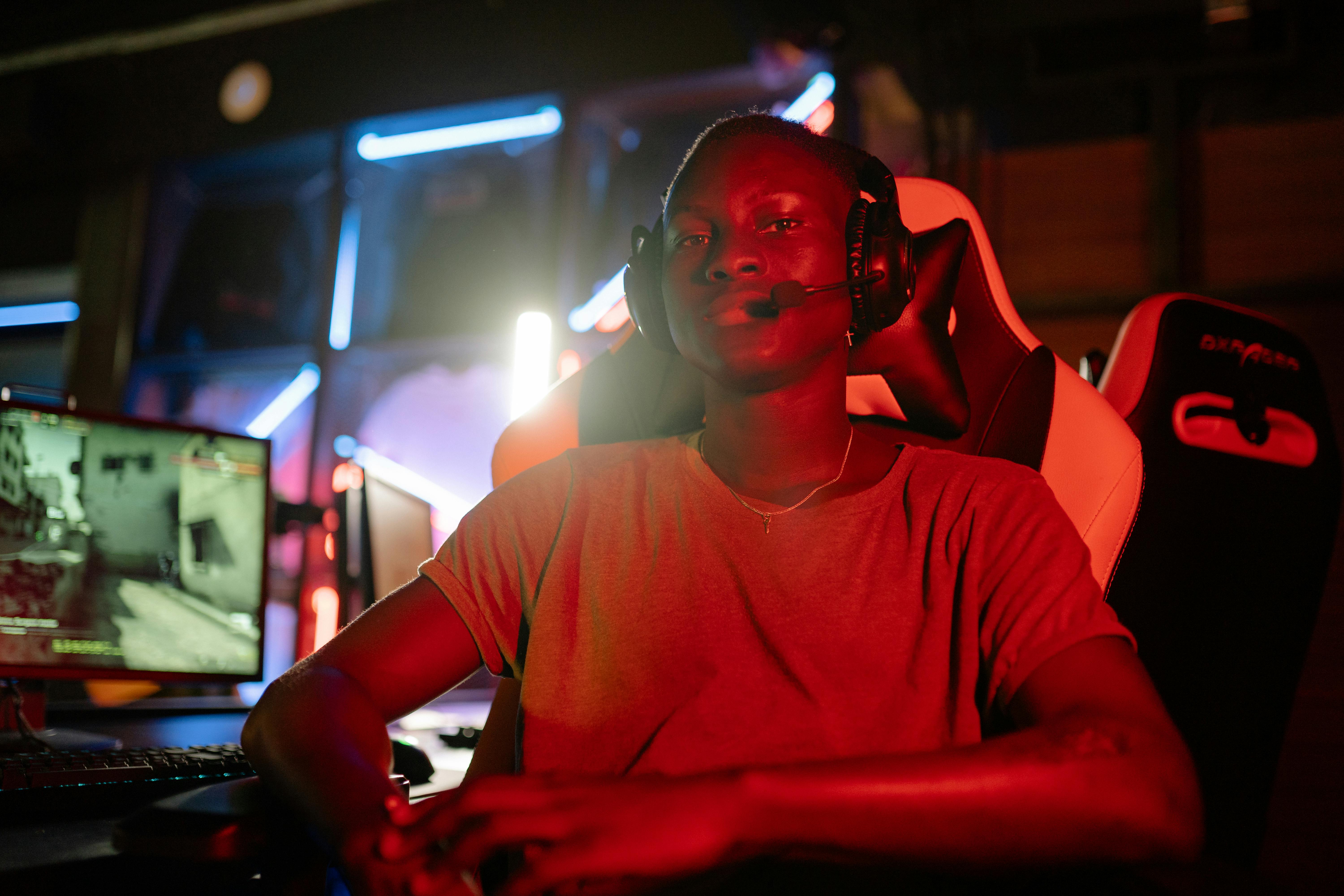
Welcome to 2026! Game streaming isn't just a niche anymore; it's the heartbeat of modern gaming. Dive into our definitive guide to the best cloud gaming services, cutting-edge streaming hardware, and monetization strategies that are redefining how we play and earn. Discover how 5G, AI, and next-gen platforms are delivering unparalleled low-latency, 4K experiences directly to your screen, wherever you are. Whether you're a casual gamer, a competitive esports enthusiast, or an aspiring content creator, this article will equip you with the knowledge to make informed decisions and maximize your digital adventures.
Introduction to the Topic
The year is 2026, and the gaming landscape has undergone a seismic shift. The days of needing a top-tier gaming PC or console tethered to a single screen are rapidly fading into memory. Thanks to ubiquitous 5G networks, advanced Wi-Fi 7, and revolutionary cloud infrastructure, game streaming has evolved from a nascent technology into a dominant force, offering unprecedented accessibility, flexibility, and graphical fidelity. From your smart TV to your tablet, and even your AR/VR headset, the most demanding AAA titles are now just a tap away, rendered in the cloud and streamed instantly to your device with imperceptible latency.
This isn't just about playing games; it's about an entire ecosystem. The creator economy built around game streaming is booming, with new tools and platforms empowering individuals to build communities and careers. Interactive streaming features are blurring the lines between player and viewer, while AI-driven enhancements are personalizing experiences like never before. In this comprehensive guide, searchgamex.com delves into the state of game streaming in 2026, exploring the technological marvels, the economic opportunities, and the best options available to both players and aspiring streamers looking to stake their claim in this exhilarating digital frontier.
Backgrounds & Facts
The journey to 2026 has seen game streaming mature at an astonishing pace. What began as a promising but often inconsistent concept in the late 2010s has now become a multi-billion dollar industry, projected to exceed $15 billion annually by the end of the decade. Key technological advancements have been the bedrock of this growth:
- 5G & Wi-Fi 7 Ubiquity: Near-universal 5G coverage and the widespread adoption of Wi-Fi 7 have drastically reduced latency and increased bandwidth, making seamless 4K/120fps streaming a reality even on mobile devices. Edge computing, placing servers closer to users, further minimizes signal travel time.
- AI-Powered Upscaling & Compression: Technologies like NVIDIA's DLSS 4.0 and AMD's FSR 3.0, now heavily integrated with cloud infrastructure, use AI to intelligently upscale lower-resolution streams to crisp 4K or even 8K, while simultaneously reducing bandwidth requirements. This means stunning visuals without the internet strain.
- Dedicated Cloud GPUs: Server farms are now equipped with custom-built, high-density GPU arrays, often featuring the equivalent of multiple RTX 4090s or even next-gen 50-series cards per user session for premium tiers, ensuring unparalleled graphical horsepower on demand.
- Advanced Codecs & Protocols: Next-generation video compression codecs (e.g., AV2) and optimized streaming protocols have drastically improved image quality and responsiveness, making cloud gaming almost indistinguishable from local play for most users.
- Subscription Economy Dominance: The shift from ownership to access continues. Major publishers and platform holders have embraced subscription models, offering vast libraries of games accessible via the cloud, often bundled with other entertainment services.
Major players like Microsoft (Xbox Cloud Gaming), NVIDIA (GeForce NOW), Sony (PlayStation Plus Premium), and Amazon (Luna) have invested heavily, creating robust ecosystems that integrate hardware, software, and content. New entrants and specialized services continue to emerge, pushing innovation and competition, ultimately benefiting the consumer with more choices and better experiences.
Expert Opinion / Analysis
According to Dr. Evelyn Reed, lead analyst at Digital Nexus Research, "2026 marks the inflection point where cloud gaming truly becomes the default for a significant portion of the gaming population. The technological hurdles of latency and visual fidelity are largely overcome for premium services, shifting the competitive battleground to content exclusivity, user experience, and value proposition."
One of the biggest challenges, however, remains content rights and fragmentation. "While the tech is there, gamers are increasingly facing subscription fatigue," notes gaming economist Liam Chen. "Publishers are leveraging exclusive deals to drive subscriptions to their platforms, meaning players often need multiple services to access all their desired titles. The platform that offers the most compelling library and seamless cross-platform experience will ultimately win the long game."
The creator economy is also experiencing its own revolution within streaming. "Interactive streaming is no longer a gimmick; it's a core feature," explains veteran streamer and industry consultant, 'StreamSensei' Maya Singh. "Viewers can now directly influence gameplay decisions, purchase in-game items for streamers, and participate in dynamic narratives. This deep engagement is fostering stronger communities and opening up entirely new monetization avenues beyond traditional ads and subscriptions, including direct micro-transactions and tokenized fan rewards."
AI's role extends beyond upscaling. "AI is now personalizing game recommendations, optimizing stream quality in real-time based on network conditions, and even generating dynamic content within games themselves," adds Dr. Reed. "We're moving towards a future where the game adapts to the player, and the stream adapts to the viewer, all powered by intelligent algorithms." The focus for platforms now is not just raw power, but intelligent, adaptive delivery and a rich, diverse content offering that justifies the monthly cost.
💰 Best Options in Comparison (VERY IMPORTANT)
For gamers and aspiring streamers in 2026, the choices are more diverse and powerful than ever. Whether you prioritize a vast game library, top-tier performance, or the flexibility to play your existing PC games, there's a cloud streaming service tailored for you. For creators, dedicated hardware setups still offer unparalleled control, but cloud-based streaming solutions are rapidly catching up.
-
Xbox Cloud Gaming (Game Pass Ultimate)
Overview: Microsoft's flagship cloud service, deeply integrated with the Xbox ecosystem. Game Pass Ultimate offers access to hundreds of games, including all first-party Xbox titles on day one, playable across consoles, PCs, mobile devices, and smart TVs. In 2026, it boasts enhanced server blades equivalent to Xbox Series X hardware, delivering consistent 4K/60fps experiences with ray tracing enabled for supported titles.
Pros: Massive, rotating library; day-one access to Xbox exclusives; seamless integration with Xbox consoles; excellent value for money with PC Game Pass and Xbox Live Gold included; robust community features.
Cons: Performance can occasionally vary based on server load and internet quality; some games are optimized for touch controls, but a controller is generally recommended; limited to the Game Pass library.
-
NVIDIA GeForce NOW Ultimate
Overview: The premium choice for PC gamers who want to play their *existing* game libraries in the cloud. GeForce NOW Ultimate in 2026 offers access to servers powered by virtualized NVIDIA RTX 50-series GPUs, delivering true 4K/120fps or even 8K/60fps with ultra-low latency. It connects to your Steam, Epic Games Store, and other digital storefronts, allowing you to stream titles you already own.
Pros: Unmatched graphical performance and low latency; supports a vast library of PC games you already own; no need to re-buy games; ideal for competitive gamers and visual enthusiasts; flexible across many devices.
Cons: Requires owning games; higher subscription cost for the Ultimate tier; some newer titles may have a delay in support; not a 'game library included' service.
-
PlayStation Plus Premium (Cloud Streaming)
Overview: Sony's answer to cloud gaming, bundled within the highest tier of PlayStation Plus. It provides access to a curated library of hundreds of PS4, PS5, and classic PlayStation titles playable via the cloud on PS5, PC, and select smart TVs. 2026 enhancements include more stable 4K/60fps streaming for many titles and improved regional server coverage.
Pros: Access to a significant library of PlayStation exclusives and classics; ideal for PlayStation console owners extending their play to other devices; includes other PS Plus benefits like monthly games and online multiplayer.
Cons: Game library might not be as constantly updated with new AAA titles as Xbox Game Pass; performance can be inconsistent depending on region and title; primarily focused on the PlayStation ecosystem.
-
Dedicated Professional Streaming Setup (Hardware & Software)
Overview: For serious content creators, a high-end local PC setup with dedicated streaming hardware (capture cards, multiple monitors, professional microphones, lighting) still offers the ultimate control over stream quality, overlays, and content production. This option is for those aiming for maximum customization and professional-grade broadcasts.
Pros: Full control over every aspect of your stream; superior audio and video quality; flexibility for complex multi-source setups; no reliance on cloud server availability or performance tiers.
Cons: Significant upfront investment in hardware; requires technical knowledge for setup and troubleshooting; ongoing maintenance; requires a powerful local internet connection for uploads.
Here's a comparison table to help you decide:
| Feature | Xbox Cloud Gaming (Game Pass Ultimate) | NVIDIA GeForce NOW Ultimate | PlayStation Plus Premium (Cloud) | Dedicated Pro Streaming Setup |
|---|---|---|---|---|
| Target Audience | Casual to hardcore gamers, Xbox fans, multi-device players | PC gamers, performance enthusiasts, those with existing libraries | PlayStation fans, console owners, retro gamers | Professional streamers, content creators, maximum control seekers |
| Game Library / Model | Included Game Pass library (hundreds of titles, Xbox exclusives day one) | Stream your owned PC games (Steam, Epic, etc.) | Included PS Plus Premium library (PS4/PS5/Classics) | Any PC game, console game (via capture card) |
| Max Performance (2026) | 4K/60fps with Ray Tracing (Series X equivalent) | 4K/120fps or 8K/60fps (RTX 50-series equivalent) | 4K/60fps (PS5 equivalent) | Limited only by local hardware and internet upload |
| Supported Devices | Xbox consoles, PC, Android, iOS, Smart TVs, Meta Quest (experimental) | PC, Mac, Android, iOS, Smart TVs, NVIDIA SHIELD, Chromebooks | PS5, PC, select Smart TVs | PC (Windows/Linux), Mac (with Bootcamp/VM), Stream Deck/Elgato |
| Estimated Monthly Pricing (2026) | ~$19.99 USD | ~$24.99 USD | ~$17.99 USD | Varies (Hardware: $2000-$10000+ upfront) |
| Key Pros | Vast, current library; great value; cross-platform; strong community | Highest performance; play owned PC games; low latency; broad device support | PlayStation exclusives; classic titles; PS ecosystem integration | Ultimate control; highest quality potential; maximum customization |
| Key Cons | Performance can vary; controller often required; library rotation | Requires game ownership; higher cost; some game support delays | Smaller new game library; performance variability; limited device support | High upfront cost; technical expertise needed; ongoing maintenance |
Outlook & Trends
The future of game streaming beyond 2026 promises even more revolutionary changes. We anticipate several key trends that will shape the industry:
- Spatial Computing & Holographic Gaming: As AR/VR headsets become lighter, more powerful, and truly wireless, cloud streaming will be the primary delivery mechanism for complex spatial computing games and holographic experiences. Imagine full-scale interactive worlds projected into your living room, rendered in the cloud.
- Hyper-Personalized & Dynamic Content: AI won't just recommend games; it will dynamically alter game narratives, generate quests, and even create unique in-game assets based on player preferences, streaming history, and biometric data. Every playthrough could be truly unique.
- Web3 Integration & Creator Ownership: The convergence of game streaming with Web3 technologies will empower creators and players with true ownership of in-game assets (NFTs), decentralized monetization models, and community-governed platforms. Streamers could directly reward viewers with crypto or unique digital items.
- Sustainable Streaming: With growing environmental concerns, cloud providers will increasingly focus on energy-efficient data centers powered by renewable energy. "Green streaming" will become a significant marketing point as the industry strives for a smaller carbon footprint.
- Edge AI for Latency Prediction: AI models deployed at the network edge will predict and compensate for micro-latency fluctuations in real-time, making cloud gaming feel even more responsive than local play in some scenarios.
- Cross-Platform Interoperability: While exclusivity battles will continue, pressure from consumers will push for greater interoperability, allowing players to access their game libraries and social circles across different cloud platforms more seamlessly.
The innovation pipeline is robust, promising a gaming future that is more immersive, accessible, and personalized than anything we've experienced before.
Conclusion
In 2026, game streaming is no longer a futuristic concept; it's a vibrant, mature reality that has fundamentally reshaped how we interact with digital entertainment. With blazing-fast 5G, intelligent AI, and powerful cloud infrastructure, high-fidelity gaming is now a ubiquitous experience, accessible on virtually any device. Whether you're a casual player seeking convenience, a competitive gamer demanding peak performance, or an aspiring creator aiming to build a brand, the options available today are more robust and varied than ever before.
From the expansive libraries of Xbox Cloud Gaming and PlayStation Plus Premium to the raw power of NVIDIA GeForce NOW Ultimate, and the unparalleled control of a dedicated professional setup, there's a perfect solution waiting for you. The future promises even more incredible advancements, from holographic gaming to hyper-personalized experiences, ensuring that the world of game streaming will remain at the forefront of technological innovation.
Don't just observe the revolution – be a part of it! Explore the options, compare the features, and choose the streaming path that best suits your needs. The ultimate gaming experience of 2026 is here, and it's ready for you to unleash your potential. Visit searchgamex.com for the latest deals and exclusive guides to kickstart your streaming journey today!