
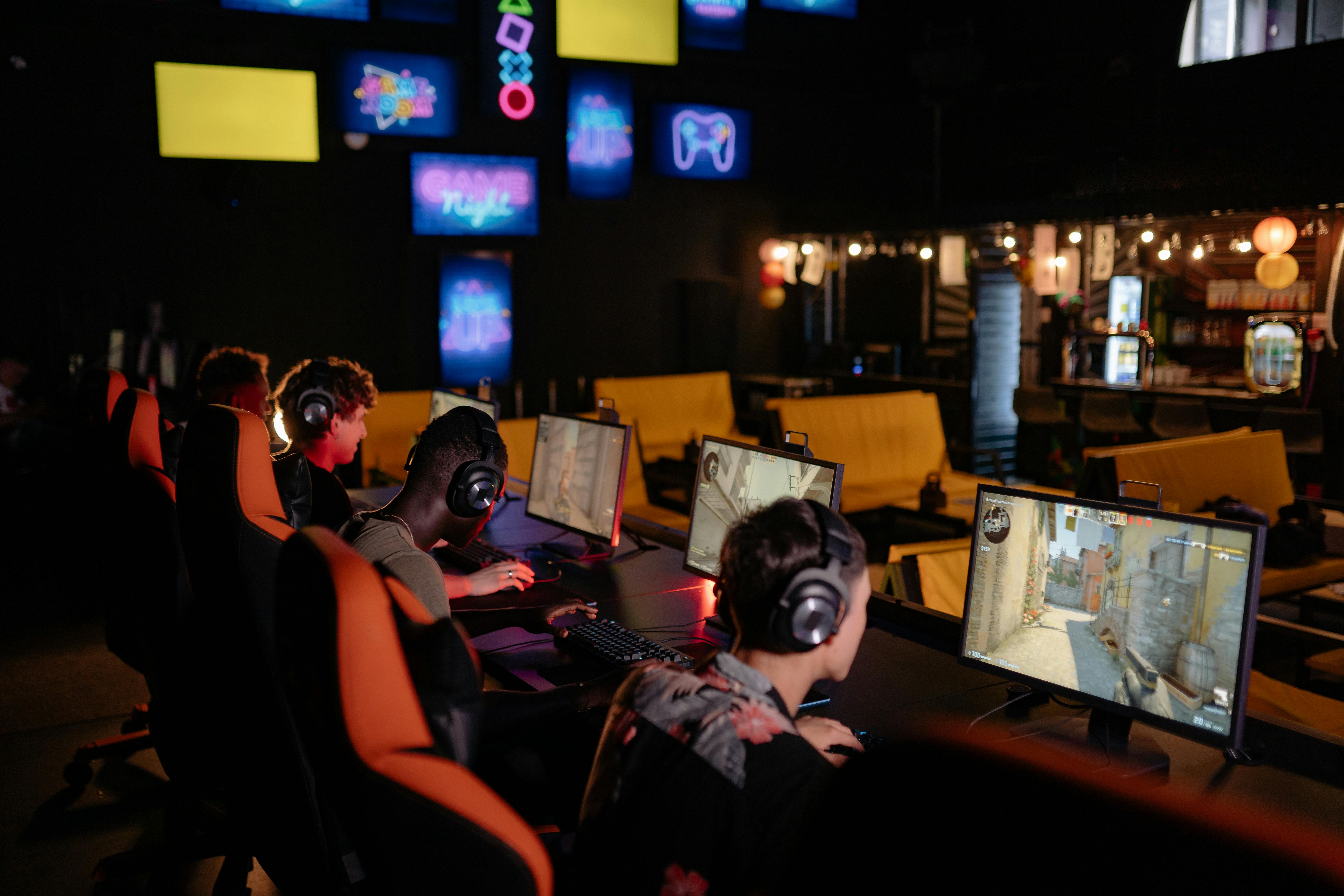
In 2026, cloud gaming isn't just a promise – it's a powerful reality. Discover how services like NVIDIA GeForce NOW, Xbox Cloud Gaming, and PlayStation Plus Premium are transforming PC gaming, offering high-fidelity experiences without the need for expensive hardware upgrades. This comprehensive guide compares the top game streaming subscriptions, helping you choose the best platform to save money, maximize your gaming dollar, and play more, no matter your budget or device.
Introduction to the Topic
The year is 2026, and the landscape of PC gaming has undergone a seismic shift. For decades, the mantra was simple: if you wanted cutting-edge graphics, blistering frame rates, and the freedom to play the latest AAA titles, you needed a powerful, often expensive, gaming PC. This meant annual upgrades, chasing the latest GPU, grappling with driver issues, and significant upfront investment. But what if we told you that, for many gamers, this era is rapidly drawing to a close? Enter the golden age of cloud gaming.
No longer a niche experiment, cloud gaming has matured into a robust, high-performance alternative to traditional PC ownership. Thanks to advancements in network infrastructure (hello, widespread 5G and fiber!), server-side processing power, and sophisticated streaming codecs, you can now stream blockbuster titles directly to almost any device – a smart TV, a low-end laptop, a tablet, or even your smartphone – with astonishing fidelity and minimal latency. This guide isn't just about understanding what cloud gaming is; it's about empowering you to make smart purchasing decisions in 2026, identifying the services that offer the best value, performance, and game libraries to replace your costly gaming rig.
Backgrounds & Facts
The journey to 2026's cloud gaming revolution has been long and fraught with early failures. Remember the struggles of OnLive or Gaikai? The technology simply wasn't ready. High latency, pixelated streams, and limited game libraries plagued early attempts, leading to skepticism. However, behind the scenes, tech giants were investing billions, learning from past mistakes, and pushing the boundaries of what was possible.
By 2026, several critical advancements have converged to make cloud gaming a truly viable, even preferable, option for millions:
- Global Server Infrastructure: Massive data centers strategically located worldwide minimize the physical distance data travels, drastically reducing latency.
- Advanced Streaming Codecs: Proprietary compression algorithms deliver stunning 4K visuals at 120 frames per second (fps) with incredible efficiency, requiring less bandwidth than ever before.
- Ubiquitous High-Speed Internet: The widespread rollout of fiber optics and next-generation wireless networks (5G/6G) provides the stable, low-latency connections essential for a seamless gaming experience.
- Dedicated Hardware: Cloud providers now leverage custom server blades packed with the latest GPUs and CPUs, often surpassing the power of most consumer-grade PCs.
The market reflects this growth. Industry analysts project the cloud gaming market to exceed $10 billion by 2026, attracting both casual players and hardcore enthusiasts looking to cut costs without sacrificing performance. This shift isn't just about convenience; it's about accessibility, democratizing high-end gaming for a global audience who might not afford a $2000+ gaming PC and its continuous upgrade cycle.
Expert Opinion / Analysis
"Cloud gaming in 2026 is no longer a compromise; it's a strategic choice for savvy consumers," states Dr. Evelyn Reed, a leading analyst in interactive entertainment technology. "The performance gap between a local high-end PC and a premium cloud service has narrowed to the point where, for most users, the difference is imperceptible. The real differentiator now lies in game libraries, subscription models, and ecosystem integration."
Experts agree that the biggest hurdle – input latency – has been largely overcome for most users with decent internet. "We're seeing sub-20ms latency figures from major providers to well-connected users, which is on par with, or even better than, some local Wi-Fi connections," explains network engineer Kenji Tanaka. "The focus has shifted from mere playability to competitive performance, even for fast-paced shooters."
The debate around game ownership versus access continues, but the trend leans heavily towards subscriptions. "Consumers are increasingly comfortable with the 'Netflix model' for entertainment," notes financial tech expert Maria Rodriguez. "The value proposition of Game Pass or PlayStation Plus Premium – access to hundreds of titles for a monthly fee – often outweighs the desire to 'own' a digital license, especially when considering the rapid depreciation of game values and the constant influx of new releases."
This paradigm shift is also influencing the PC hardware market. While enthusiast builders will always exist, mainstream PC sales are seeing a slight dip in the high-end segment, as more consumers opt for cheaper laptops or streaming devices paired with a cloud subscription. The focus for hardware manufacturers is now shifting towards peripherals – high-refresh-rate monitors, low-latency controllers, and ergonomic gaming chairs – enhancing the cloud gaming experience rather than powering it.
💰 Best Options in Comparison (VERY IMPORTANT)
Choosing the right cloud gaming service in 2026 depends on your priorities: game ownership, library size, performance needs, and budget. We've analyzed the top contenders to help you make the best decision for your wallet and your gaming habits.
-
NVIDIA GeForce NOW Ultimate
Best for: PC gamers who own games on Steam, Epic Games Store, etc., and demand uncompromising performance. It's not a game library service, but a powerful virtual PC in the cloud.
Why it's a top choice: GeForce NOW Ultimate provides access to virtual rigs powered by NVIDIA's latest GPU architecture (equivalent to an RTX 4080 or even next-gen 50-series in 2026). This means stunning 4K resolution at up to 120fps, full ray tracing support, and NVIDIA DLSS/AMD FSR upscaling technologies. You bring your own games, linking your existing digital storefronts. It's the closest you'll get to owning a top-tier gaming PC without the hardware cost. Low latency is a hallmark, making it suitable even for competitive multiplayer titles.
Considerations: You need to own the games separately. While many popular titles are supported, not every game on Steam is available. Pricing for the Ultimate tier is premium, reflecting the high-end hardware access.
-
Xbox Cloud Gaming (part of Xbox Game Pass Ultimate)
Best for: Gamers seeking a vast, curated library of first-party and third-party titles, accessible across a wide range of devices, including consoles, mobile, and PC. Excellent value for money.
Why it's a top choice: Bundled with Xbox Game Pass Ultimate, this service offers an incredible value proposition. You get access to hundreds of games, including all Xbox Game Studios titles on day one, without needing to purchase them. Stream directly from Microsoft's powerful Azure servers, often running on Series X-level hardware. Its seamless integration with the Xbox ecosystem means you can pick up where you left off between devices. It's particularly strong on mobile with touch controls for many titles.
Considerations: While performance is excellent, the absolute highest resolutions (like 4K 120fps) might be reserved for specific titles or not always matched to GeForce NOW's raw power. Internet speed requirements are moderate but stable. The library rotates, so some games may leave the service.
-
PlayStation Plus Premium (Streaming)
Best for: PlayStation enthusiasts, those looking for exclusive console titles on PC, and retro gaming fans. Integrates well with the PlayStation ecosystem.
Why it's a top choice: PlayStation Plus Premium offers a robust catalog of PS4, PS3, and classic PS1/PS2 titles available for streaming, alongside a selection of PS5 games (often requiring a PS5 console for full library access, but streaming is expanding). It's the only way to play many PlayStation exclusives on your PC or other streaming devices without owning a console. The service has significantly improved its streaming quality and latency by 2026, making classic titles feel fresh.
Considerations: The primary focus remains on PlayStation's own library. While the service has expanded, it doesn't offer the "bring your own PC games" flexibility of GeForce NOW. Performance for some older titles might not match the modern fidelity of current-gen cloud platforms. Some of the newest PS5 titles might still require a local download or a PS5 console for optimal play, with streaming options expanding gradually.
| Feature | NVIDIA GeForce NOW Ultimate | Xbox Cloud Gaming (Game Pass Ultimate) | PlayStation Plus Premium (Streaming) |
|---|---|---|---|
| Primary Model | Bring Your Own Games (BYOG) | Subscription Library (Included Games) | Subscription Library (Included Games) |
| Game Library | Access to supported games you own on Steam, Epic, etc. (thousands) | Hundreds of Xbox Game Pass titles (including all Xbox Studios day one releases) | Hundreds of PS4, PS3, PS2, PS1, and select PS5 titles |
| Max Resolution/FPS | Up to 4K 120fps, 1440p 240fps (depending on game/monitor) | Up to 1080p 60fps (select titles 1440p/4K TBD) | Up to 1080p 60fps (select titles 4K TBD) |
| Ray Tracing/DLSS/FSR | Yes (full support) | Limited/Game-dependent | Limited/Game-dependent |
| Supported Devices | PC, Mac, ChromeOS, Android, iOS/iPadOS, NVIDIA SHIELD, Smart TVs | PC, Mac, Android, iOS/iPadOS, Xbox consoles, Smart TVs | PC, PS4, PS5, Smart TVs |
| Monthly Cost (approx.) | ~$19.99 - $24.99 USD | ~$16.99 USD (includes Game Pass Ultimate) | ~$17.99 USD |
| Latency Performance | Excellent (often sub-20ms) | Very Good (sub-40ms typical) | Good (sub-50ms typical, improved) |
| Minimum Internet Speed | 40-50 Mbps (for 4K/120fps) | 20-25 Mbps (for 1080p/60fps) | 15-20 Mbps (for 1080p/60fps) |
| Key Benefit | Unmatched raw performance, play your existing PC library | Massive, rotating game library, first-party day one titles | Exclusive PlayStation titles on PC, extensive retro catalog |
Outlook & Trends
The future of cloud gaming in 2026 and beyond is incredibly bright, promising even more convenience, performance, and accessibility. Several key trends are shaping its evolution:
- Edge Computing: Expect more localized server nodes, bringing processing power even closer to the user to further slash latency, making the experience virtually indistinguishable from local play for everyone.
- AI Integration: AI will play an increasingly vital role, from optimizing streaming quality dynamically based on network conditions to potentially generating personalized game content or even assisting with NPC behaviors in real-time within the cloud.
- Hardware Agnosticism: The goal is true hardware independence. Imagine playing a graphically intensive AAA title directly on a smart refrigerator or a smartwatch (okay, maybe not that far, but the principle holds!). Smart TVs will become the primary gaming hub for many households.
- Hybrid Models: We might see more hybrid approaches, where core game data is streamed, but certain elements (like UI or less demanding physics) are processed locally to reduce bandwidth and latency.
- Subscription Evolution: Expect more tiered subscriptions, perhaps even micro-subscriptions for specific game genres or time-limited passes, giving consumers even more granular control over their spending.
- VR/AR Integration: While still in its early stages for cloud streaming, the immense computational demands of high-fidelity VR/AR make it a prime candidate for cloud-based rendering, offloading the heavy lifting from local headsets.
These advancements mean that by the end of the decade, the concept of a dedicated 'gaming PC' might be an increasingly niche pursuit for enthusiasts, while cloud gaming becomes the default for the vast majority.
Conclusion
In 2026, cloud gaming has firmly established itself as a powerful, cost-effective, and incredibly convenient alternative to traditional PC gaming. The days of spending thousands on hardware, only to see it become obsolete in a couple of years, are numbered for many. Services like NVIDIA GeForce NOW Ultimate, Xbox Cloud Gaming, and PlayStation Plus Premium offer compelling reasons to ditch the upgrade cycle and embrace the future.
Whether you're a hardcore PC gamer with an existing library, a console enthusiast looking to expand your horizons, or a casual player seeking maximum value, there's a cloud gaming service tailored for you. By carefully comparing the game libraries, performance tiers, and subscription costs, you can make an informed decision that saves you money and unlocks a world of gaming possibilities without the hardware headache. So, are you ready to cut the cord on expensive PCs and step into the future of gaming? Your wallet will thank you.